
Understanding grade 1 fatty liver
Quietly carrying out more than 500 crucial functions, including detoxifying the blood and assisting digestion, the liver remains the body’s largest vital internal organ. Given its tireless work, it is a crucial indicator of overall metabolic health.
In recent years, an increasing number of individuals are receiving a diagnosis of grade 1 fatty liver, a condition that serves as an essential early warning sign regarding diet and lifestyle.
At King’s Transplant Centre, our expertise in advanced liver care allows us to stress that early diagnosis is the key to prevention. Understanding what this mild condition means and why it occurs is the first step toward safeguarding your liver health.
What is grade 1 fatty liver?
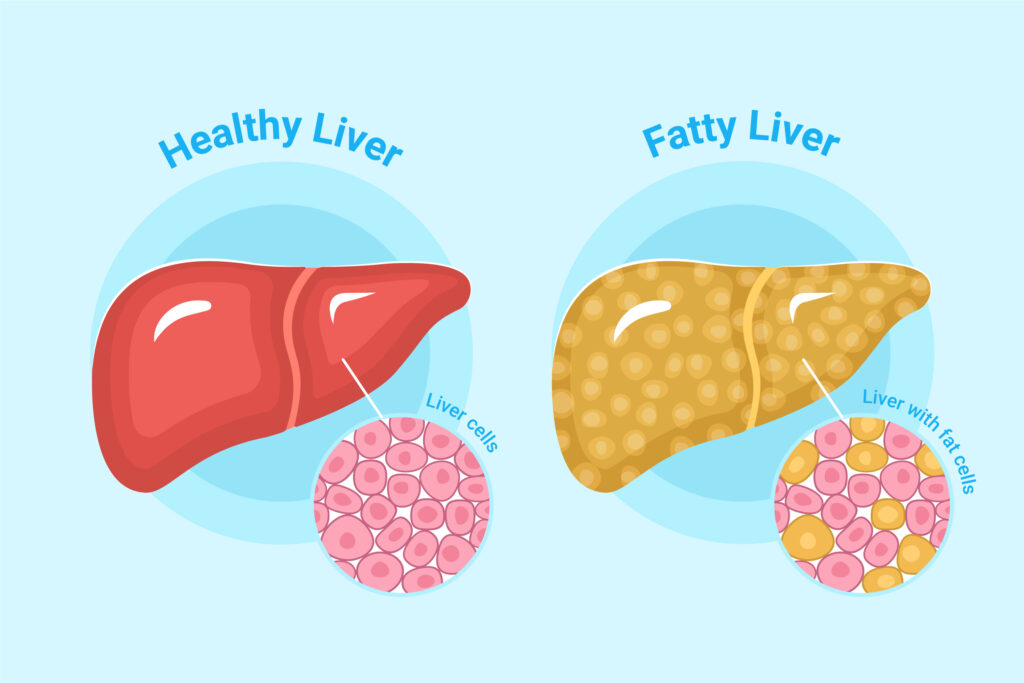
Medically speaking, a fatty liver is formally known as Hepatic Steatosis. This occurs when excess fat (triglycerides) accumulates within the liver cells. While a small amount of fat is normal, if the fat content exceeds 5% of the liver’s total weight, fatty liver disease is diagnosed.
It is the mildest and earliest form of the disease. The grading system (Grades 1, 2, and 3) is based on the quantity of fat accumulation and its appearance on imaging tests, such as an ultrasound.
- Grade 1 (Mild): Fat accumulation is minimal, typically involving less than one-third (under 33%) of the liver tissue. The condition is entirely reversible and usually asymptomatic.
- Grade 2 (Moderate): Fat accumulation is denser, affecting up to two-thirds of the liver tissue.
- Grade 3 (Severe): Fat infiltration is extensive, affecting more than two-thirds of the liver, and carries a higher risk of inflammation and long-term damage.
Because it is the initial stage, receiving a grade 1 fatty liver diagnosis presents a critical opportunity to reverse the condition before it progresses.
The causes of fatty liver grade 1
The vast majority of fatty liver cases fall under Non-alcoholic fatty liver disease (NAFLD), which is strongly linked to lifestyle and metabolic health. If you have been diagnosed with a mild fatty liver, it is almost certainly due to these underlying factors.
The primary causes of fatty liver grade 1 revolve around insulin resistance and excessive calorie intake:
1- Obesity and excess weight: Being overweight is the biggest risk factor, particularly carrying fat around the abdomen (visceral fat). This fat contributes to systemic inflammation and increases the fat delivered to the liver.
2- Insulin resistance and type 2 diabetes: In response to the body’s insulin resistance, the pancreas elevates its production of insulin. This causes the liver to store excess sugar as fat.
3- High cholesterol and triglycerides: Abnormal blood lipid levels contribute directly to the fat accumulating within liver cells.
4- Poor diet: The primary effect of consuming diets high in refined carbs, saturated fats, and soft drinks is that they force the liver to work overtime, thus driving the conversion of excess energy directly into stored fat.
5- Sedentary lifestyle: When physical activity is lacking, the body’s capacity to efficiently metabolize both fats and sugars is diminished.
While diagnosing grade 1 fatty liver is common, it is inaccurate to ask, “Is grade 1 fatty liver normal?” It indicates that your metabolic health is under stress and requires prompt attention.
Symptoms, diagnosis, and severity
One of the challenges with early-stage fatty liver disease is the lack of noticeable warning signs. There are virtually no signs of fatty liver at the grade 1 stage.
In most instances, a grade 1 fatty liver is an incidental finding discovered during an abdominal ultrasound, CT scan, or MRI performed for an unrelated reason. It may also be suspected if routine blood tests show slightly elevated liver enzymes (ALT and AST).
Is grade 1 fatty liver dangerous?
This is the most frequent question patients ask. The reassuring answer is, not immediately. At this stage, the condition is reversible and typically carries a very low risk of progressing to severe liver damage (fibrosis or cirrhosis).
However, Grade 1 fatty liver must be treated as a significant warning sign. If the underlying causes (obesity, poor diet, diabetes) are not addressed, the condition is likely to progress:
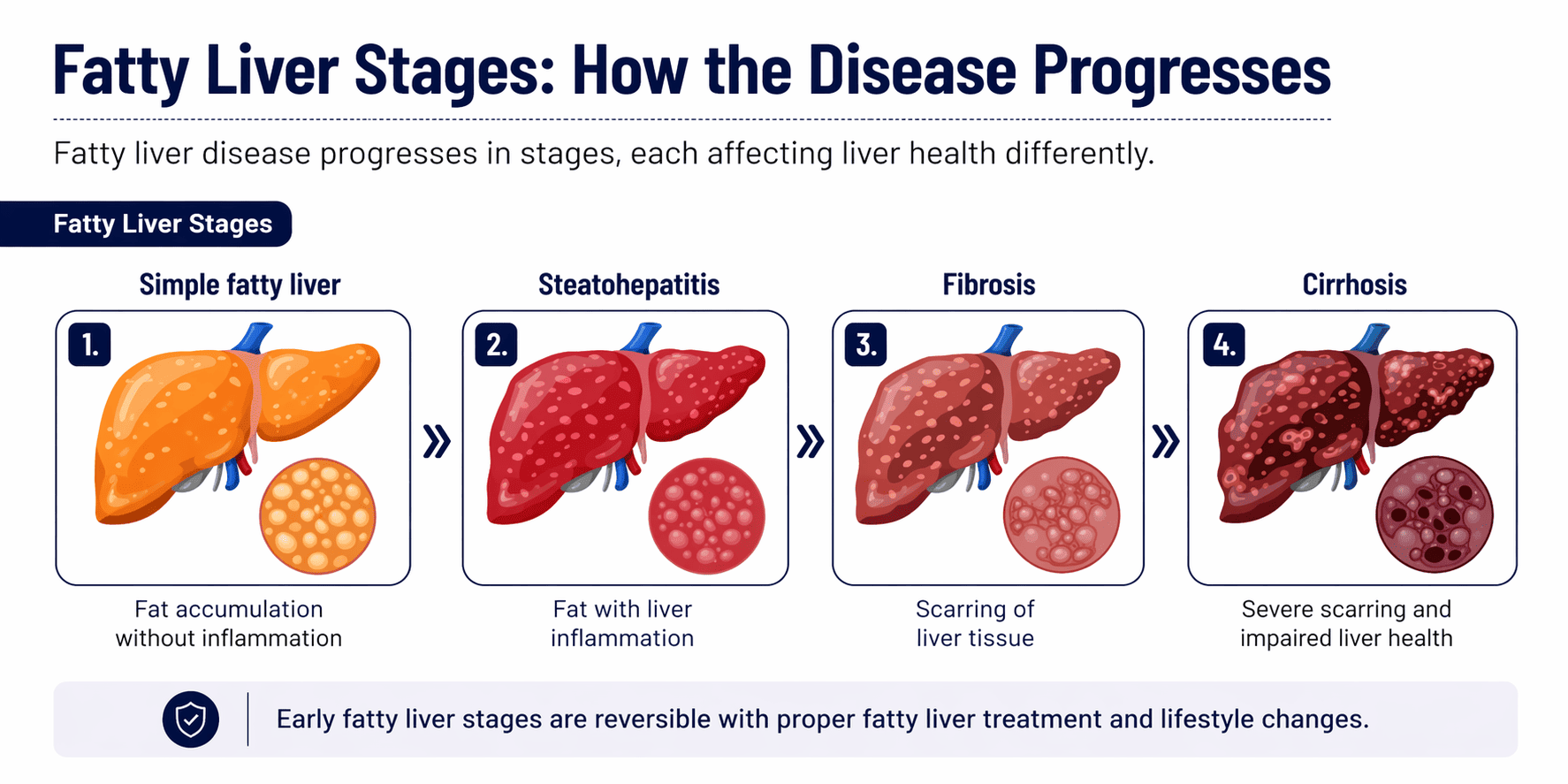
Progression: Grade 1 → Grade 2 → Grade 3 → NASH (Non-Alcoholic Steatohepatitis, or inflamed fatty liver) → Fibrosis → Cirrhosis (irreversible scarring). Therefore, while the current stage is mild, the trajectory of progression is the danger.
Fatty liver grade 1 treatment and reversal
The excellent news for anyone diagnosed with this condition is that the core fatty liver grade 1 treatment is entirely within your control and does not typically require medication.
The goal is complete reversal through sustained lifestyle modification. Key strategies for managing and reversing grade 1 fatty liver:
1- Achieve sustainable weight loss: Simply losing between 5% and 10% of your total body weight is often sufficient to achieve a significant reduction or complete elimination of fat from the liver. This is the single most effective intervention.
2- Dietary overhaul: Focus on complex carbohydrates, lean protein, and healthy fats.
Focus on a dietary overhaul: Adopt an eating plan—like the Mediterranean diet—that is rich in fruits, vegetables, and whole grains. Equally important is the crucial elimination of sugary drinks and highly processed foods.
3- Regular physical activity: Your goal should be to incorporate a minimum of 150 minutes of moderate-intensity aerobic exercise into your weekly routine. Exercise not only helps with weight loss but also improves insulin sensitivity, reducing the fat stored in the liver.
4- Manage underlying conditions: If you have Type 2 Diabetes, hypertension, or high cholesterol, strict management of these conditions is essential for liver recovery.
5- Hepatitis vaccinations: Liver specialists often recommend Hepatitis A and B vaccinations as a crucial component of the management plan for patients diagnosed with Grade 1 fatty liver, protecting the liver from additional harm.
Overview
Hepatitis B and C are not just viral infections; they are major risk factors for liver cancer. While the risk is real, it can be managed with preventive strategies, timely treatment, and regular monitoring.
With vaccination, early testing, lifestyle changes, and timely treatment, the risk can be significantly reduced.
If you have hepatitis or are concerned about your liver health, early evaluation and testing can save lives. Now is the time to act.
Your liver health matters. Schedule your consultation with King’s Liver Transplant Centre and take the first step towards prevention and protection.