

Kidney Failure Treatment in Dubai
Kidney Failure treatment in Dubai

- Home
- Kidney Diseases
- Kidney Failure
Coming across the term ‘kidney failure’ can be intimidating and scary. It’s normal to worry if you notice changes in your health or if your doctor brings up kidney issues. The good news is that with early care, good advice, and modern treatments, many people live well even if their kidneys are not working at full strength.
At King’s Transplant Centre, the focus is on early detection, supportive care, and advanced solutions, including kidney failure treatment in Dubai. This page explains kidney failure in simple words so you can understand the signs, risks, and steps to protect your health.
What is Kidney Failure?
Your kidneys are two bean-shaped organs in your lower back. They filter waste, balance fluids, control blood pressure, and help make red blood cells.
Kidney failure happens when the kidneys cannot filter blood properly. Waste and extra fluid then build up in the body. This can affect many organs and overall health.
Kidney failure can be:
- Acute – sudden and sometimes reversible
- Chronic – slow and long-term (also called chronic kidney disease or CKD)
Did you know? |
How do you know if your kidneys are failing?
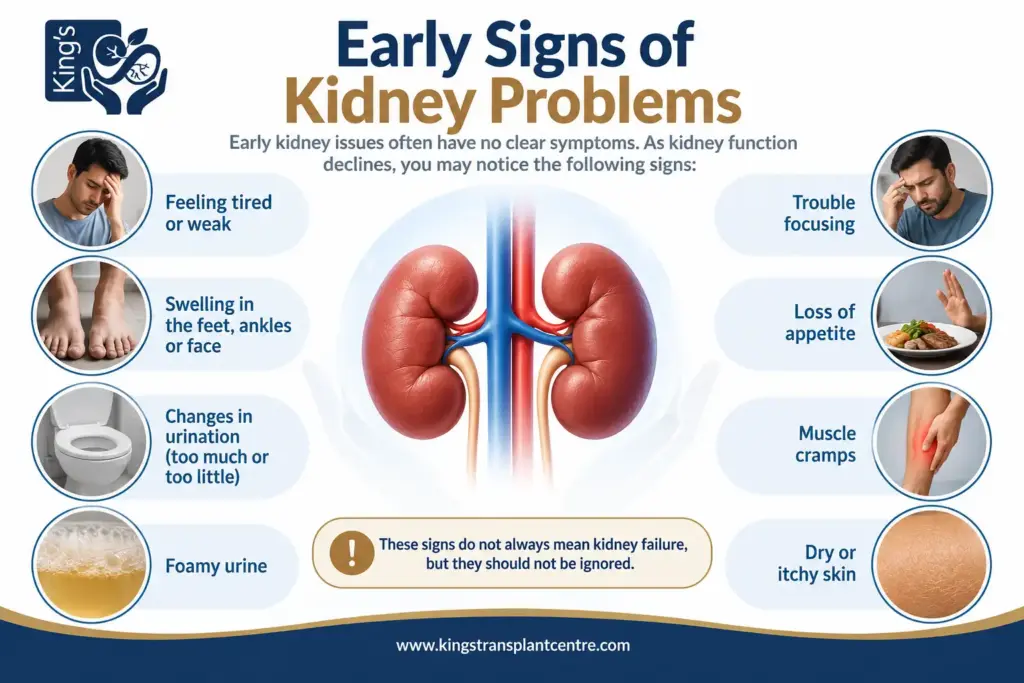
Early kidney problems often have no clear kidney failure symptoms. That is why regular health checkups with a Kidney Specialist Doctor in Dubai matter.
As kidney function drops, you may notice:
- Feeling tired or weak
- Swelling in the feet, ankles, or face
- Changes in urination (too much or too little)
- Foamy urine
- Trouble focusing
- Loss of appetite
- Muscle cramps
- Dry or itchy skin
These signs do not always mean kidney failure, but they should not be ignored.
What are the signs of kidney failure?
As the condition progresses, kidney failure symptoms may become more noticeable:
- Persistent swelling due to fluid retention
- Shortness of breath
- Nausea or vomiting
- Sleep problems
- High blood pressure
- Kidney failure, stomach swelling from fluid buildup
If these kidney failure symptoms appear together, a medical check is important. A Kidney Specialist Dubai patients trust can guide proper testing.
Understanding Kidney Failure Stages
Chronic kidney disease is categorized into five stages based on kidney function.
Stage 1–2:
Mild damage. Often, there are no symptoms. Found through tests.
Stage 3:
Moderate loss of function. Symptoms may begin.
Stage 4 kidney failure:
Severe damage. Waste builds up. Planning for advanced treatment often starts here.
Stage 5 (End-stage kidney disease):
Kidneys work at less than 15%. Dialysis or Kidney transplant may be needed.
Knowing the stage helps doctors choose the best care plan.
Kidney Diseases
Meet Our kidney specialists in Dubai


Can you die from kidney failure?
This is a common and honest question. Yes, untreated kidney failure can be life-threatening. When kidneys stop working, toxins and fluids rise to dangerous levels.
However, many people live for years with proper treatment. Dialysis and kidney transplant have saved millions of lives. Early diagnosis greatly improves outcomes.
What are the signs of dying from kidney failure?
In very advanced, untreated cases, the body may slowly weaken.
Signs can include:
- Extreme fatigue and sleepiness
- Confusion
- Very little urine output
- Severe swelling
- Difficulty breathing
- Loss of appetite
These signs usually appear in end-stage disease without treatment. With medical care, many of these complications can be managed or delayed.
If a loved one has advanced kidney disease, supportive and palliative care can also improve comfort and quality of life.
How to prevent kidney failure?
Prevention is always better than treatment. Simple habits can protect your kidneys.
Control blood sugar
If you have diabetes, keeping your blood sugar within the recommended range is essential. High sugar levels over time can damage the tiny blood vessels inside the kidneys. Follow your doctor’s advice, take prescribed medication regularly, monitor your glucose levels, and stick to a balanced meal plan. Even moderate improvement in sugar control can slow kidney damage.
Manage blood pressure
High blood pressure exerts extra strain on the kidneys and weakens their filtering units. Aim to keep your blood pressure within healthy limits through medication, reduced salt intake, regular exercise, and stress management. Routine monitoring at home can also help you stay on track and catch changes early.
Stay well hydrated
Drinking enough water helps your kidneys flush out toxins and keep your body’s fluids balanced. The right amount of water is different for everyone, but staying hydrated helps your kidneys work better. If you already have kidney disease, follow your doctor’s advice about how much to drink.
Eat a balanced, kidney-friendly diet
Eating plenty of fruits, vegetables, whole grains, and lean protein is good for your kidneys. Try to limit extra salt, processed foods, and sugary drinks to reduce stress on your kidneys. If you are at risk, your doctor may also suggest watching your protein, potassium, or phosphorus intake.
Avoid smoking and limit alcohol
Smoking lowers blood flow to your kidneys and can make damage worse. It also raises your risk of high blood pressure. Quitting smoking and drinking less alcohol can lower your risk of kidney problems and help you feel better overall.
Use medications carefully
Using some painkillers or over-the-counter medicines too often or for a long time can hurt your kidneys. Always follow the directions and talk to your doctor before taking supplements or herbal products. Let your healthcare provider know about all the medicines you use.
Maintain a healthy weight and stay active
Being active helps your blood flow, keeps your blood pressure in check, and supports healthy blood sugar. Staying at a healthy weight lowers your risk of diabetes and high blood pressure, which are main causes of kidney failure. Even simple things like brisk walking for 30 minutes most days can make a difference.
Schedule regular health checkups
Many kidney problems start without any warning signs. Simple blood and urine tests can find changes early, before you feel sick. If you have diabetes, high blood pressure, or a family history of kidney disease, regular checkups with a Kidney Specialist Dubai are even more important.
Even small lifestyle changes make a difference over time.
Kidney failure treatment in Dubai
Treatment depends on the stage and cause.
Options may include:
- Medications to control blood pressure and symptoms
- Diet and lifestyle changes
- Dialysis (hemodialysis or peritoneal dialysis)
- Kidney transplant for suitable candidates
A qualified Kidney Specialist Doctor in Dubai can tailor care to each patient. The goal is to slow disease, manage kidney failure symptoms, and maintain quality of life.
Take proactive action against kidney failure. Find hope and support at King’s Transplant Centre
Hearing the words “kidney failure” can feel overwhelming. But many patients continue to work, travel, and enjoy family life with the right treatment.
With awareness and care, you can return the favor and support them for a healthier future. Do not wait for symptoms to worsen before taking action. Kidney health deserves timely attention and expert care.
At King’s Transplant Centre, you will find experienced specialists, advanced options for kidney failure treatment in dubai, and compassionate support at every stage of the journey. Taking proactive steps with a trusted kidney specialist Doctor in dubai can protect your future health and improve your quality of life.
Reach out, get evaluated, and move forward with confidence knowing the right team is by your side.
