
Fatty Liver: Diet and Liver Detox Fruits
Fatty liver affects millions of people worldwide due to sedentary lifestyles, poor dietary habits, and metabolic conditions.
If you’ve recently been told you have a fatty liver, it’s not time to panic about your liver health. With the right fatty liver treatment, including small tweaks in the diet and lifestyle, you can reverse this condition.
This blog is designed to help you understand the role of a fatty liver diet, identify what foods are good for liver repair, and discover the best fruits and foods that support reversing fatty liver disease naturally.
What is fatty liver disease and why diet matters?
Fatty liver disease occurs when excess fat builds up in the liver cells. There are two main types:
Alcoholic fatty liver disease (AFLD) caused by heavy alcohol consumption | Non-alcoholic fatty liver disease (NAFLD) linked to obesity, diabetes, and a poor diet |
If left untreated, fatty liver can progress to inflammation, fibrosis, or even cirrhosis. That’s why adopting a liver-friendly diet is crucial for reversing fatty liver disease.
DID YOU KNOW? Non-alcoholic fatty liver disease (NAFLD) now roughly affects around 25% of the global population, making it the most common liver condition in the world. |
For many, fatty liver treatment starts in the kitchen. At King’s Liver Transplant Centre of Excellence, part of the renowned King’s College Hospital London network in Dubai, our specialists see how dietary changes can begin reversing fatty liver disease before it progresses.
The fatty liver diet: What foods are good for liver repair?
A well-designed fatty liver diet isn’t restrictive; it’s strategic. The goal is to include foods that support liver health by actively repairing cells, reducing inflammation, and supporting detox pathways.
At King’s Transplant Centre, specialists often recommend focusing on what each food does for your liver, not just what it contains.
Foods that protect liver cells from damage – Your first line of defense
If you’re exploring what foods are good for liver repair, these options help reduce oxidative stress and prevent further damage:
- Spinach & Kale – Rich in chlorophyll, helping neutralize toxins and support cellular repair
- Berries (optional add-on) – High in antioxidants that protect liver tissue
- Green tea – Packed with catechins that improve fat metabolism and reduce inflammation
Foods that help flush out toxins – Supporting natural detox pathways
Your liver is already a detox organ, these foods simply help it work more efficiently:
- Broccoli & Cauliflower – Contain compounds that activate detox enzymes
- Garlic – Boosts liver enzyme activity and supports toxin breakdown
- Lemon water – If you’re wondering is lemon good for fatty liver, the answer is yes, it stimulates detox enzymes and improves hydration
Foods that support liver regeneration – Helping your liver heal faster
For those looking at how to reverse fatty liver and improve recovery:
- Beetroot – Enhances blood flow and supports bile production
- Walnuts – Rich in omega-3s and glutathione, essential for liver repair
- Papaya (optional tie-in) – Supports digestion and reduces fat accumulation
Foods that reduce liver fat accumulation – Key for reversing fatty liver disease
Reducing fat buildup is central to fatty liver treatment and reversing fatty liver disease:
- Turmeric – Curcumin helps lower liver fat and improve enzyme levels
- Olive oil – A healthier fat that reduces fat storage in the liver
- Coffee – Surprisingly, linked to lower liver fibrosis risk when consumed in moderation
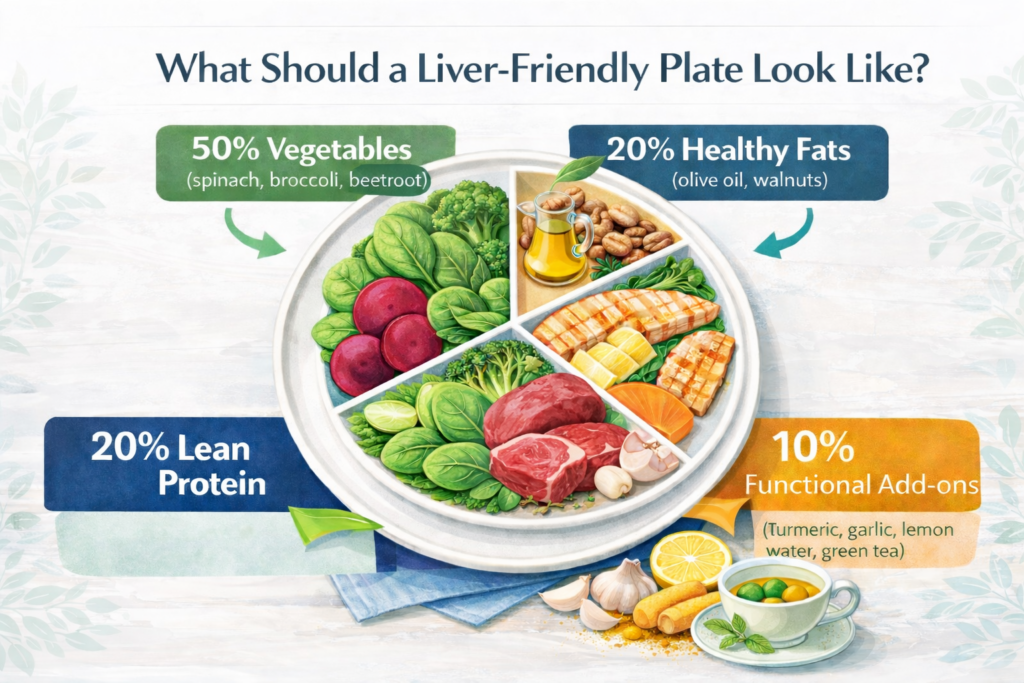
⭐Quick Insight – What should a liver-friendly plate look like?
|
Best fruits for liver health - What to include vs what to avoid?
Fruit is a natural fast food but not all fruits work the same way for a fatty liver . Here’s a quick breakdown of best fruits for liver health and some you should avoid.
Include in your diet (supports liver repair) | Why it helps your liver |
Grapefruit | The antioxidants in grapefruit reduce inflammation and support fatty liver treatment |
Papaya | If you’re asking is papaya good for liver – yes. It supports digestion and reduces oxidative stress |
Berries (Blueberries, Strawberries, Raspberries) | Packed with antioxidants that help reduce liver fat and support foods that are good for your liver |
Avocado | Boosts glutathione (key for detox) and contains healthy fats – considered a best food for liver |
Pomegranate | Anti-inflammatory properties support how to improve liver health |
Amla (Indian Gooseberry) | Extremely rich in Vitamin C, supports detox, and how to make liver healthy |
Banana (in moderation) | If you’re wondering is banana good for fatty liver -yes, but limit to one per day due to natural sugars |
Fruits to avoid for fatty liver
Avoid or limit (can worsen fatty liver) | Why to avoid |
Fruit Juices | High in fructose, spikes blood sugar, promotes fat storage in the liver |
Dried fruits | Concentrated sugars can slow progress in how to reverse fatty liver |
Canned fruits in syrup | Loaded with added sugars, it’s harmful for a fatty liver diet |
Overripe high sugar fruits (mango, grapes) | Excess natural sugars may contribute to fat buildup |
Flavored/processed fruit snacks | Artificial sugars and additives strain liver function |
Apple cider vinegar for fatty liver: Does it help?
Apple cider vinegar for fatty liver has gained popularity as a natural remedy. The acid component reduces fat accumulation and improves insulin sensitivity.
The benefits include supporting fat metabolism, improving digestion, and helping in detoxifying the liver.
While it can complement a fatty liver diet, it should always be used in moderation and under medical guidance, especially when part of a structured fatty liver treatment plan.
Also Read- Post-Liver Transplant Recovery: Timeline, Diet & Follow-Up
How to reduce fatty liver quickly: Foods to eliminate on a liver-friendly diet
Knowing what foods are good for liver repair is only half the equation; it’s equally important to know what to cut:
- Alcohol
- Refined sugars and high-fructose corn syrup
- Fried and ultra-processed foods
- White bread, white rice, and refined pasta
- Excess red meat
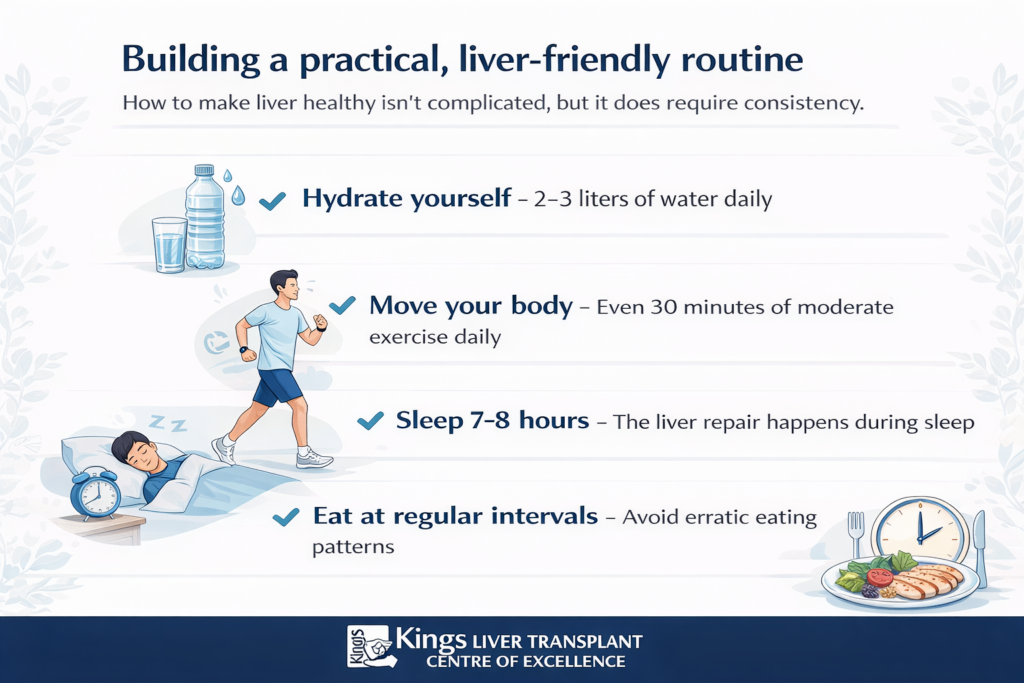
Building a practical, liver-friendly routine
How to make liver healthy isn’t complicated, but it does require consistency.
Follow these simple steps for a liver-friendly routine:
- Hydrate yourself – 2–3 liters of water daily
- Move your body – Even 30 minutes of moderate exercise daily
- Sleep 7–8 hours – The liver repair happens during sleep.
- Eat at regular intervals – Avoid erratic eating patterns
These small but impactful changes support fatty liver treatment and help maintain a liver friendly diet.
FAQs
When should I see a specialist for fatty liver?
If you’ve been diagnosed with fatty liver, experience persistent fatigue, abdominal discomfort, or have a family history of liver disease, a hepatologist evaluation is strongly recommended. Don’t wait for symptoms to worsen.
Can fatty liver be completely reversed with diet alone?
Yes, but in early to moderate stages, dietary changes along with regular exercise can reverse fat accumulation.However, for advanced stages of fatty liver you need medical intervention.
Are there any fruits to avoid completely for fatty liver?
You don’t need to eliminate fruit; just limit dried fruits, fruit juices, and canned fruits in syrup
Is lemon good for fatty liver?
Yes. Lemon water supports liver enzyme activity and hydration. Avoid bottled lemon juice, which often contains added preservatives.
How to improve liver health naturally?
Follow a liver friendly diet, exercise regularly, and include foods that are good for your liver.
What is the best food for liver repair?
Leafy greens, fatty fish, nuts, and whole grains are among the best food for liver health and repair.
Overview
Why choose king’s transplant centre: Your partner in liver health
At King’s Transplant Centre, patients benefit from expert hepatologists, advanced diagnostic facilities, and personalized nutrition counseling. Our hepatology specialists regularly use structured dietary interventions as a first-line approach in early-stage fatty liver treatment.
Whether you’re seeking advice on foods that are good for your liver, guidance on a liver-friendly diet, or support in reversing fatty liver disease, King’s Transplant Centre offers world-class care.
Your liver can heal. Give it the right support.
Book a consultation with our liver specialists today and start reversing fatty liver disease.