

Which Size of Gallbladder Stone Is Dangerous?

Finding out you have a stone in gallbladder tissue can be an unsettling experience.
Whether it was discovered during a routine check-up or after a sudden bout of intense abdominal pain, the immediate questions are almost always the same: How big is it? Is it dangerous? Do I need surgery?
The truth is that gallbladder issues are incredibly common, yet they are often surrounded by misconceptions.
Many people think that a larger stone is automatically more “dangerous,” while a smaller 5 mm 4 mm gallstone is nothing to worry about. In reality, the “danger” of a gallstone isn’t always determined by its diameter, but by its potential to cause blockages, inflammation, or infection.
If you are currently managing multiple calculi in gallbladder or are concerned about a new diagnosis, understanding the mechanics of your biliary system is the first step toward effective treatment.
This guide will walk you through everything you need to know about gallbladder stone sizes, symptoms, and when medical intervention becomes a necessity.

The big debate: Are gallstones dangerous?
A common question hepatologists and surgeons hear is: Are gallstones dangerous?
The short answer is: they can be. For many people, gallstones are “silent.” This means they sit in the gallbladder without causing any issues. However, they become dangerous when they lead to complications such as:
- Cholecystitis: Inflammation of the gallbladder itself.
- Choledocholithiasis: When a stone migrates and blocks the Common Bile Duct.
- Gallstone Pancreatitis: When a stone blocks the pancreatic duct, causing life-threatening inflammation of the pancreas.
- Gallbladder Cancer: While rare, long-term irritation from very large stones is considered a risk factor.
Quick Fact: Did you know that gallstones are not always made of cholesterol? While 80% of stones are cholesterol-based, the other 20% are “pigment stones,” made of excess bilirubin, often seen in patients with liver cirrhosis or blood disorders.
What is the normal size of gallbladder stone in mm?
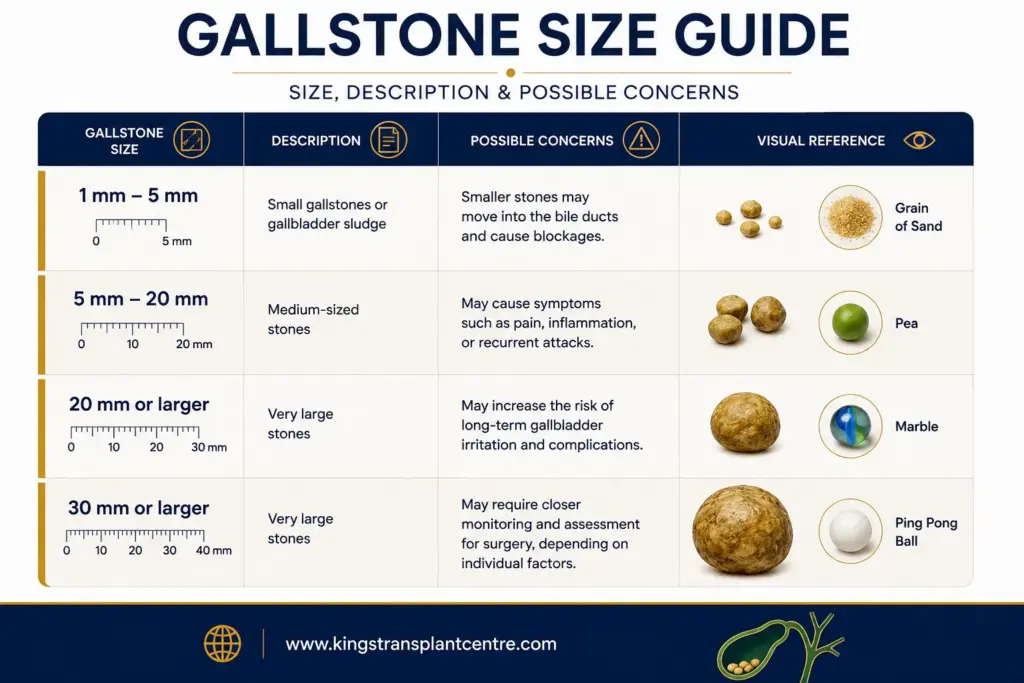
When patients receive their ultrasound results, they often ask, “what is the normal size of gallbladder stone?”
Strictly speaking, there is no “normal” size because, in a healthy state, there should be no stones at all. The gallbladder is a small, pear-shaped organ located beneath the liver. The average size of gallbladder is typically about 7 to 10 centimeters (2.7 to 3.9 inches) long and up to 5 centimeters wide when full.
Gallstones (cholelithiasis) form when bile the fluid used to digest fats hardens into pebble-like deposits. These can range dramatically in size:
Gallstone Size | Description | Possible Concerns |
1 mm – 5 mm | Small gallstones or gallbladder sludge | Smaller stones may move into the bile ducts and cause blockages |
5 mm – 20 mm | Medium-sized stones | May cause symptoms such as pain, inflammation, or recurrent attacks. |
20 mm or larger | Very large stones | May increase the risk of long-term gallbladder irritation and complications |
30 mm or larger | Very large stones | May require closer monitoring and assessment for surgery, depending on individual factors |
Interestingly, having multiple calculi in the gallbladder (many small stones) can sometimes be more clinically complex than having one single large stone, as smaller stones are more likely to travel and get stuck in narrow ducts.
How are gallstones diagnosed?
If you have symptoms of a stone in the gallbladder or your doctor suspects gallstones, the diagnosis usually begins with a clinical assessment and review of your symptoms. Your specialist may ask about the location and pattern of your pain, digestive symptoms, previous medical history, and any risk factors. Common diagnostic tests may include:
- Ultrasound scan: The most common test for detecting gallstones and assessing the gallbladder.
If you are experiencing persistent symptoms, explore our Gallbladder Surgery in Dubai services for expert diagnosis and treatment.
- Blood tests: These tests can show if there are signs of infection, inflammation, or problems with how the liver is working.
- MRI or MRCP scan: These may be recommended if doctors need a clearer view of the bile ducts or want to check for stones that may have moved.
- CT scan: This may be used in certain situations to assess complications or other abdominal conditions.
The diagnosis is not based only on the size of the gallstone. The recommended treatment will depend on the number of stones, whether symptoms are present, any signs of inflammation or blockages, and your overall health.
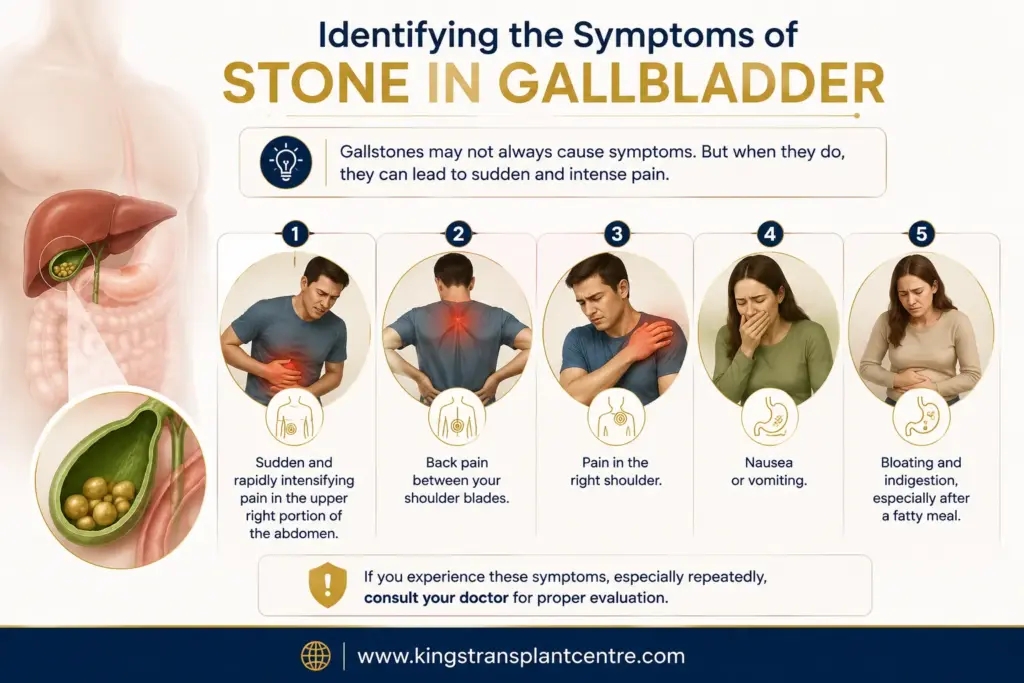
Identifying the symptoms of Stone in Gallbladder
Knowing the symptoms of stone in gallbladder can help you seek help before a minor issue becomes an emergency. While some stones cause no trouble, “active” stones usually announce themselves through “biliary colic” a specific type of intense pain.
Common signs include:
- Sudden and rapidly intensifying pain in the upper right portion of the abdomen.
- Back pain between your shoulder blades.
- Pain in the right shoulder.
- Nausea or vomiting.
- Bloating and indigestion, especially after a fatty meal
Locating the gallbladder stone pain area
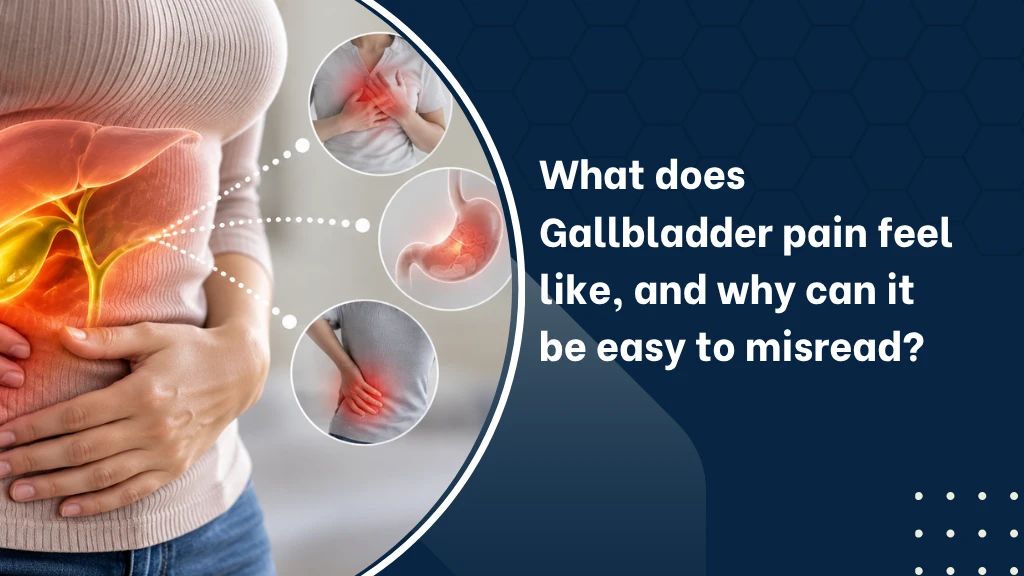
If you are trying to identify the gallbladder stone pain area, look to the “RUQ” or Right Upper Quadrant. The pain is usually felt just below the ribs on the right side.
However, because of the way our nerves are wired, this pain can “radiate.”
It is common for patients to feel a deep, gnawing ache in the center of the abdomen, just below the breastbone, which can often be mistaken for a heart attack or severe heartburn.
Small vs. large: What size of gallbladder stones need surgery?
It seems logical to assume that a large stone is more threatening, but in the world of gastroenterology, size is relative to the “bottleneck” it has to pass through.
The risk of the 5 mm 4 mm gallstone
Many patients are told they have a 5 mm 4 mm gallstone and assume it is insignificant.
However, the duct that connects the gallbladder to the rest of the digestive system (the cystic duct) is only about 3 mm to 4 mm wide.
This means a 5 mm 4 mm gallstone is the perfect size to get perfectly stuck.
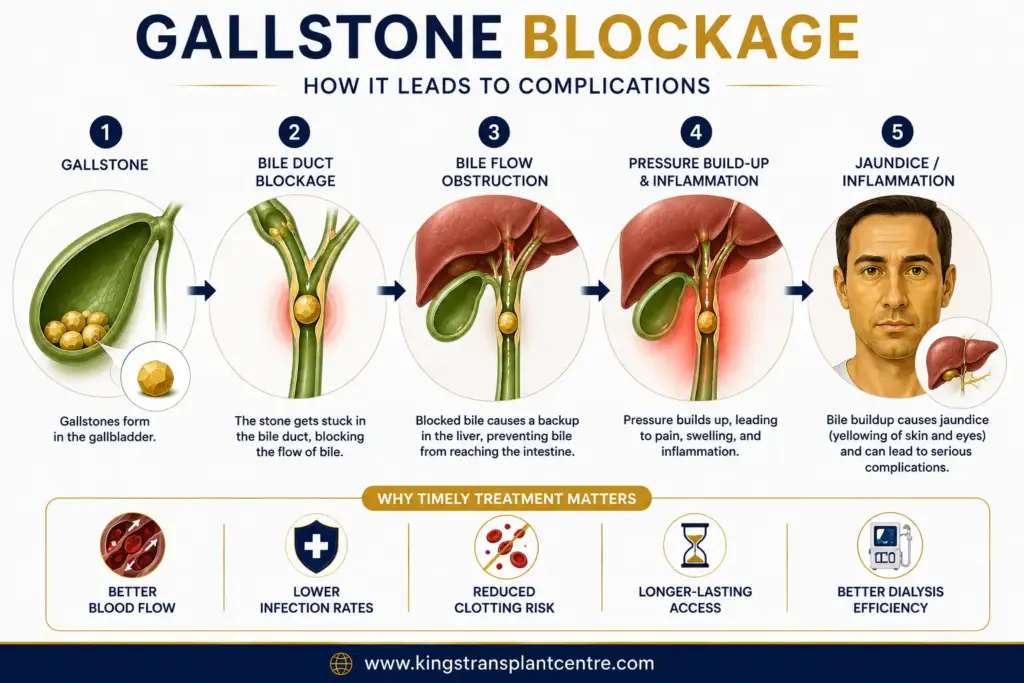
A stone that blocks this duct can cause the gallbladder to swell and become infected, a condition that requires urgent medical attention.
The danger of large stones
Conversely, stones larger than 2 cm (20 mm) are usually too big to leave the gallbladder. While they won’t cause a duct blockage, they can cause chronic irritation to the gallbladder wall.
Doctors often recommend surgery for very large stones even if they aren’t causing “attacks” because of the increased long-term risk of gallbladder wall changes and potential malignancy.
Determining what size of gallbladder stones need surgery
When deciding what size of gallbladder stones need surgery, doctors look at more than just the millimeter count. Surgery (Cholecystectomy) is generally recommended if:
- The stones are causing frequent, painful attacks.
- There are multiple calculi in gallbladder that increase the risk of duct blockage.
- The stones have caused complications like jaundice or pancreatitis.
- The stones are larger than 3 cm, even if asymptomatic.
- The patient has a “porcelain gallbladder” (calcium deposits in the wall).
Managing multiple calculi in gallbladder
If your diagnostic report mentions multiple calculi in gallbladder, it means you have several stones rather than just one. This is common in the UAE, often linked to dietary habits, rapid weight changes, or genetic predispositions.
When you have multiple stones, the chance of one of them shifting and causing a blockage is statistically higher.
If you have multiple calculi in gallbladder and begin to experience even mild indigestion or dull aches in the gallbladder stone pain area, it is a sign that your gallbladder is struggling to function and a consultation with a specialist is advised.
Why the size of gallbladder matters
The physical size of gallbladder and its ability to contract are vital indicators of health. If a stone in gallbladder tissue prevents the organ from emptying properly, the gallbladder can become “distended” (stretched out).
A distended gallbladder is often a sign of an acute blockage. If the organ cannot move bile, the bile becomes stagnant, leading to bacterial growth. This is why understanding the symptoms of stone in gallbladder especially fever or chills combined with pain is life-saving. These are signs of an infection that needs immediate treatmen
Checklist: When to see a specialist
If you have been diagnosed with a stone in gallbladder, use this checklist to gauge your risk:
- Size: Is it a 5 mm 4 mm gallstone (high risk for duct blockage) or a very large stone (high risk for chronic inflammation)?
- Frequency: Are you experiencing recurring pain in the gallbladder stone pain area?
- Quantity: Do you have multiple calculi in gallbladder?
- Systemic signs: Do you have symptoms of stone in gallbladder like yellowing of the skin (jaundice), dark urine, or pale stools?
Remember, while the question of “what size of gallbladder stones need surgery” is important, your physical symptoms and the presence of inflammation are often the most critical factors in a surgeon’s decision.
Found this Article helpful? Add King’s Transplant Centre as your preferred source for reliable health information.
Overview
Pioneering excellence: King's Transplant Centre for advanced gallbladder and liver care in the UAE
When dealing with complex biliary issues, you deserve care from a facility that understands the intricate relationship between the gallbladder and the liver.
Our at King’s Transplant Centre team specializes in both adult and pediatric cases. Whether you are dealing with a single stone in gallbladder or complex multiple calculi in gallbladder, our surgeons utilize cutting-edge, minimally invasive technology to ensure faster recovery and optimal outcomes.
We don’t just treat the stone; we treat the patient, providing a comprehensive journey from diagnosis to recovery.
With a global reputation for excellence and a 95% success rate – we are the trusted leaders in managing everything from routine gallstone surgery to life-saving liver transplants.
If you are concerned about whether your gallstones are dangerous or need a definitive answer on what size of gallbladder stones need surgery, our world-class experts are here to guide you.