
Grade 2 Fatty Liver – Causes, Symptoms and Treatment Options
A diagnosis of grade 2 fatty liver often comes unexpectedly—sometimes during a routine health check or imaging done for unrelated symptoms. Many patients are surprised, especially if they feel relatively well. The immediate questions are understandable: Is this serious? Can it be reversed? Will it affect my liver long-term?
At King’s Transplant Centre, we frequently evaluate patients at this stage. Grade 2 fatty liver represents a moderate level of fat accumulation in the liver—an important point where timely intervention can still prevent progression to more serious liver disease.
This guide explains the condition in a clear, medically grounded way—covering causes, fatty liver grade 2 symptoms, diagnosis, and evidence-based treatment for fatty liver grade 2.
Understanding Grade 2 Fatty Liver
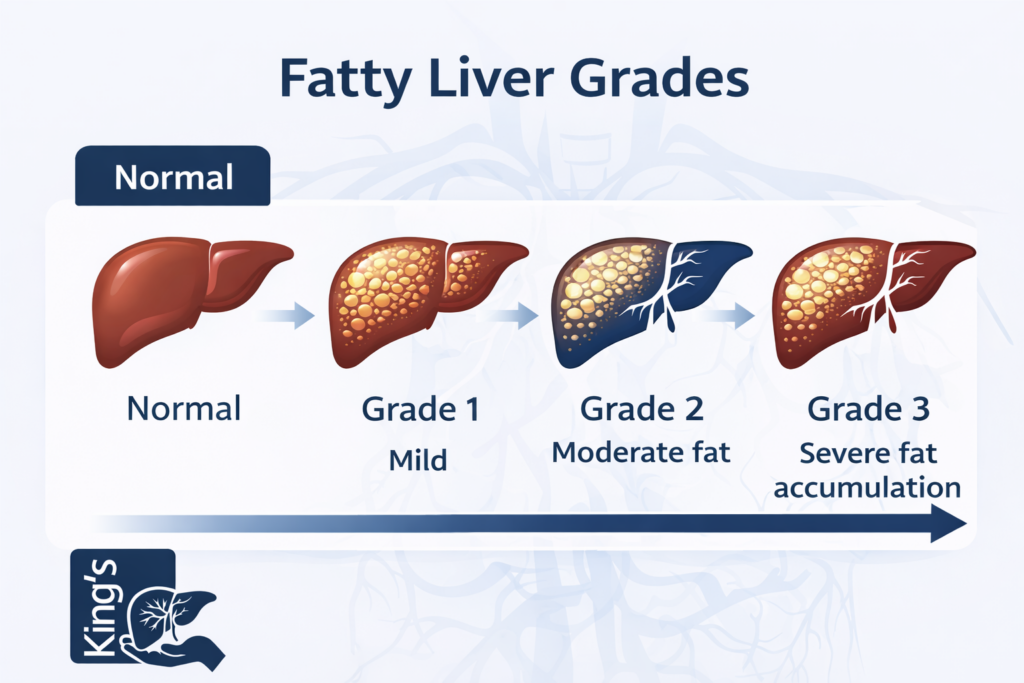
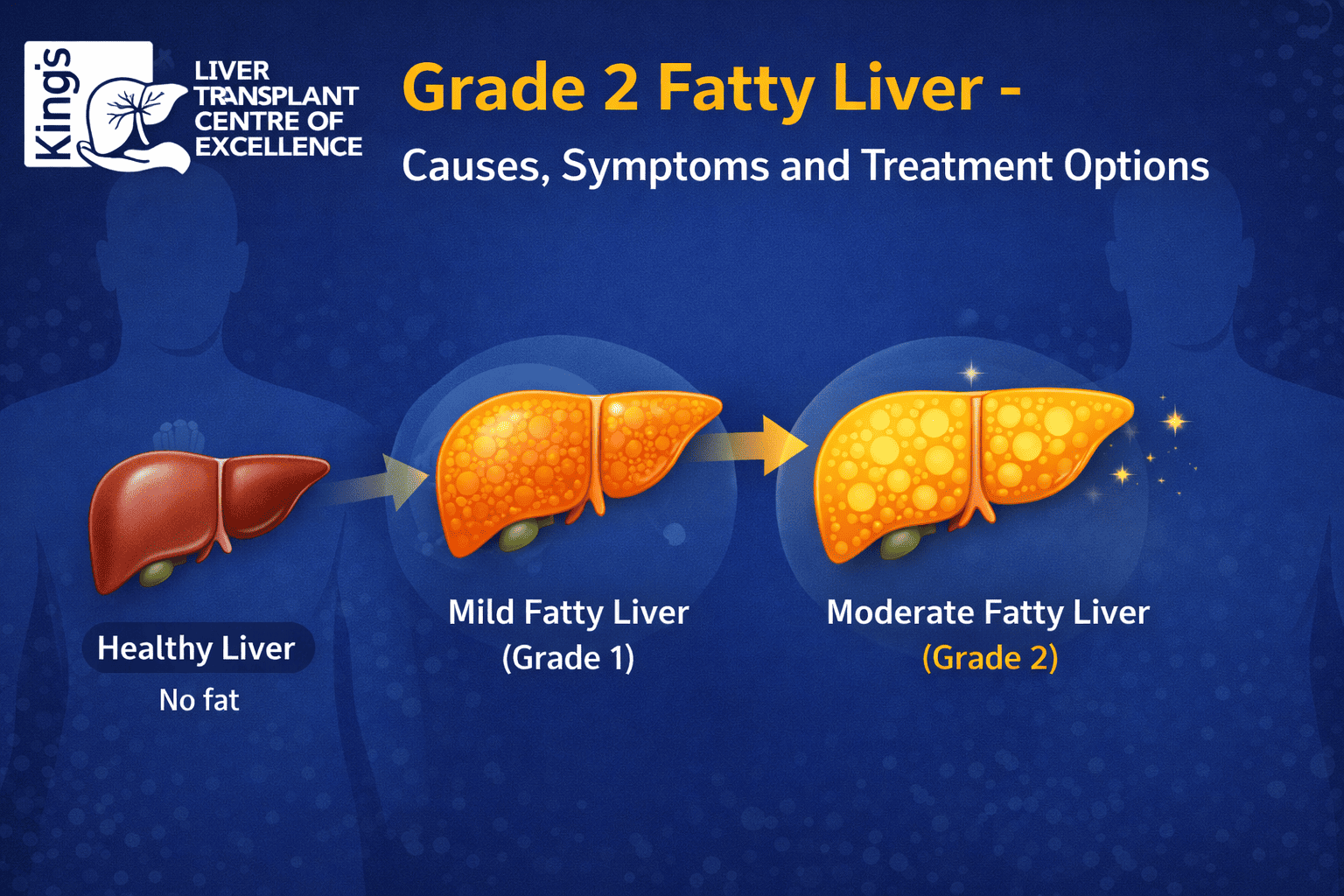
Fatty liver disease occurs when fat builds up within liver cells. It is commonly classified into three stages:
- Grade 1 (Mild): Minimal fat accumulation
- Grade 2 (Moderate): Increased fat with early structural changes
- Grade 3 (Severe): Significant fat with risk of inflammation and damage
In grade 2 fatty liver, imaging typically shows more pronounced fat deposits, and in some cases, the liver may appear enlarged—referred to as hepatomegaly with fatty liver grade 2.
While liver function may still be preserved, this stage is clinically important because it signals a higher risk of progression if not managed appropriately.
Is Grade 2 Fatty Liver Dangerous?
Patients often ask: “Is grade 2 fatty liver dangerous?”
In isolation, grade 2 fatty liver is not immediately life-threatening. However, it should not be overlooked. It represents a transitional stage, where continued fat accumulation and metabolic stress may lead to:
- Non-alcoholic steatohepatitis (NASH)
- Liver fibrosis (scarring)
- Cirrhosis in advanced stages
From a hepatology perspective, this is the stage where early medical guidance and lifestyle correction can make a meaningful difference.
Is Grade 2 Fatty Liver Common?
Yes – is grade 2 fatty liver common? Increasingly, yes.
At tertiary liver centres, including King’s Transplant Centre, we are seeing a steady rise in cases. This trend is linked to:
- Sedentary lifestyles
- Dietary patterns high in processed foods
- Increasing prevalence of diabetes and obesity
Importantly, grade 2 fatty liver is now being diagnosed in younger populations as well.
Causes of Grade 2 Fatty Liver
The development of grade 2 fatty liver is multifactorial.
Key Contributing Factors:
- Obesity and central fat accumulation
- Insulin resistance and type 2 diabetes
- Elevated cholesterol and triglycerides
- Lack of physical activity
- High intake of refined sugars and processed foods
- Alcohol use (in alcoholic fatty liver disease)
Fatty Liver in Women
There is growing clinical recognition of fatty liver symptoms in females, particularly in:
- Women with PCOS
- Post-menopausal women
- Those with metabolic or hormonal imbalance
Hormonal factors can influence fat metabolism and distribution, contributing to liver fat accumulation even in patients who may not appear significantly overweight.
Fatty Liver Grade 2 Symptoms
One of the reasons grade 2 fatty liver is often diagnosed late is the absence of prominent symptoms.
Common Fatty Liver Grade 2 Symptoms:
- Dull discomfort in the upper right abdomen
- Persistent fatigue
- Feeling of heaviness after meals
- Mild bloating
- Reduced stamina
In cases of hepatomegaly with fatty liver grade 2, patients may report a sensation of fullness due to liver enlargement.
Fatty Liver Symptoms in Females
In women, symptoms may be more subtle and include:
- Chronic fatigue
- Difficulty managing weight
- Hormonal irregularities
Because these symptoms overlap with other conditions, clinical evaluation is essential.
When to Seek Medical Care for Fatty Liver Diseases
You should consult a specialist if:
- Symptoms persist or worsen
- You have diabetes, obesity, or metabolic syndrome
- Liver function tests are abnormal
- Imaging suggests grade 2 fatty liver
Early evaluation allows for appropriate staging and timely treatment for fatty liver grade 2.
Diagnosis of Grade 2 Fatty Liver
At a specialised liver centre, diagnosis typically involves:
Clinical Assessment
Detailed history, including diet, lifestyle, and metabolic risk factors.
Blood Tests
- Liver function tests (LFTs)
- Lipid profile
- Blood sugar levels
Imaging
- Ultrasound (most commonly used)
- CT or MRI in selected cases
These help confirm fat accumulation and detect hepatomegaly with fatty liver grade 2.
Treatment for Fatty Liver Grade 2
There is no single medication that reverses fatty liver universally. The foundation of treatment for fatty liver grade 2 lies in structured lifestyle and metabolic management.
1. Weight Reduction
A 5–10% reduction in body weight can significantly decrease liver fat.
2. Fatty Liver Grade 2 Diet
A clinically recommended fatty liver grade 2 diet includes:
- Fresh vegetables and fruits
- Whole grains
- Lean protein sources
- Healthy fats (such as nuts and olive oil)
Foods to limit:
- Sugary beverages
- Refined carbohydrates
- Processed and fried foods
3. Physical Activity
At least 150 minutes of moderate exercise per week.
4. Medical Management
Control of:
- Diabetes
- Cholesterol
- Blood pressure
How to Reverse Fatty Liver Grade 2
From a clinical standpoint, reversal is possible in many patients with:
- Sustained weight management
- Regular exercise
- Dietary modification
- Avoidance of alcohol (where applicable)
Consistency is critical—short-term changes are less effective than long-term adherence.

How to Heal Fatty Liver
Patients often ask how to heal fatty liver in a sustainable way.
The approach involves:
- Improving metabolic health
- Supporting liver function through nutrition
- Avoiding harmful substances
There is no quick fix, but the liver has a strong capacity to recover when stressors are removed.
How Long Does It Take to Reverse Fatty Liver?
The timeline varies.
How long does it take to reverse fatty liver?
- Early improvements may be seen within 3–6 months
- Complete reversal may take longer depending on severity and adherence
Regular follow-up is important to monitor progress.
How to Cure Fatty Liver Grade 2
Clinically, the focus is on reversal and control, rather than a one-time cure. With proper management, patients can:
- Reduce liver fat
- Normalise liver enzymes
- Prevent progression to advanced disease
Risks of Untreated Grade 2 Fatty Liver
If left unmanaged, grade 2 fatty liver can progress to:
- Non-alcoholic steatohepatitis (NASH)
- Liver fibrosis
- Cirrhosis
- Increased cardiovascular risk
This highlights the importance of early treatment for fatty liver grade 2.
What Patients Can Expect During Consultation
At King’s Transplant Centre, evaluation typically includes:
- Comprehensive medical history
- Lifestyle assessment
- Diagnostic testing
- Personalised management plan
Patients are encouraged to discuss concerns openly, including diet, exercise, and long-term expectations.
Overview
FAQs
Yes, grade 2 fatty liver is often reversible, especially when identified early. The liver has a strong regenerative capacity, meaning it can repair itself if the underlying causes are addressed. With consistent lifestyle changes—such as weight loss, a structured fatty liver grade 2 diet, regular physical activity, and control of metabolic conditions—many patients can significantly reduce liver fat and improve liver function over time.
A common concern is: “is grade 2 fatty liver dangerous?”
While it is not immediately life-threatening, it is an important warning stage. If left untreated, it may progress to more serious conditions like inflammation (NASH), fibrosis, or even cirrhosis. Early treatment for fatty liver grade 2 can help prevent these complications and protect long-term liver health.
Yes, grade 2 fatty liver is common, particularly in individuals with sedentary lifestyles, obesity, diabetes, or poor dietary habits. With increasing lifestyle-related health issues globally, it is now being diagnosed more frequently—even in younger adults and those without obvious symptoms.
Fatty liver grade 2 symptoms are often mild or non-specific, which can make early detection difficult. Some patients may experience fatigue, mild discomfort in the upper right abdomen, or a feeling of heaviness after meals. In many cases, the condition is detected incidentally during imaging studies rather than through symptoms alone.
Hepatomegaly with fatty liver grade 2 refers to an enlarged liver due to fat accumulation within liver cells. This enlargement is usually identified on imaging such as ultrasound. While it may not always cause noticeable symptoms, some patients report a sense of fullness or pressure in the abdominal area.
The most effective treatment for fatty liver grade 2 focuses on addressing the root causes. This includes gradual weight loss, dietary modification, regular exercise, and management of associated conditions like diabetes or high cholesterol. There is no single medication that cures fatty liver universally, so long-term lifestyle changes remain the cornerstone of treatment.
A proper fatty liver grade 2 diet includes nutrient-rich, balanced foods such as vegetables, fruits, whole grains, lean proteins, and healthy fats. It is equally important to limit processed foods, sugary beverages, refined carbohydrates, and excessive saturated fats. A consistent, sustainable eating pattern is more beneficial than short-term restrictive diets.
If you’re wondering how to reverse fatty liver grade 2, the focus should be on sustainable lifestyle changes rather than quick fixes. Losing even a modest amount of weight (5–10%), increasing physical activity, and improving dietary habits can significantly reduce liver fat. Regular follow-up with a healthcare provider helps track progress.
The answer to how long does it take to reverse fatty liver varies from person to person. Some patients may see improvement within a few months, while others may require longer depending on the severity of the condition and consistency of lifestyle changes. Regular monitoring is important to assess progress.
Yes, fatty liver symptoms in females can sometimes present differently. Women may experience fatigue, hormonal imbalance, or difficulty losing weight. Conditions such as PCOS or menopause-related changes can increase the risk, making early evaluation important in women with these risk factors.
Yes, regular exercise is one of the most effective ways to reduce liver fat. Both aerobic activities (like walking, cycling, or swimming) and strength training help improve metabolism and insulin sensitivity, which are key factors in managing grade 2 fatty liver.
If left untreated, grade 2 fatty liver can progress to more serious liver conditions, including inflammation, fibrosis, and cirrhosis. It is also associated with an increased risk of cardiovascular disease. Early diagnosis and appropriate treatment for fatty liver grade 2 can significantly reduce these risks.
No, fatty liver symptoms are often subtle or completely absent, especially in the early and moderate stages. This is why many cases of grade 2 fatty liver are detected incidentally during routine health check-ups or imaging studies.
When patients ask how to heal fatty liver permanently, it is important to understand that long-term success depends on maintaining healthy habits. While liver fat can be reduced or reversed, recurrence is possible if lifestyle changes are not sustained. A balanced diet, regular exercise, and ongoing medical follow-up are essential for lasting results.
A diagnosis of grade 2 fatty liver is an opportunity for early intervention.
At this stage, the condition is often reversible, and with the right medical guidance and lifestyle adjustments, patients can prevent progression to more serious liver disease.
Timely action, consistency, and professional support are key to protecting long-term liver health.
Medical Disclaimer
This content is for informational purposes only and should not be considered medical advice. Individual conditions vary, and proper diagnosis and treatment require consultation with a qualified healthcare professional.