

Liver Transplant Success Rate by Age: Statistics and Recovery

Every liver transplant journey begins with hope – reclaim the vibrancy of a second life, not just to survive, but to thrive!
Every liver transplant journey begins with hope the hope of reclaiming health, strength, and a better quality of life. A liver transplant can save a person’s life when the liver is no longer able to function properly. During the procedure, the damaged liver is replaced with a healthy liver from either a living or deceased donor.
At King’s Transplant Centre, adults and children have access to both living donor and deceased donor liver transplantation under one roof.
Liver transplant survival rate by age is one of the most important factors affecting liver transplant success rate and liver transplant life expectancy. Younger patients often recover faster and have slightly higher survival rates, while older adults may need more time and follow-up care after surgery.
The overall success rate is around 85–90% after 1 year and 70–80% after 5 years. However, the results vary depending on the patient’s age, general health, and recovery after surgery
Why Age Matters in Liver Transplant Success
A liver transplant is a life-saving procedure for patients with advanced liver disease or liver failure. While the operation itself is highly successful, age can influence:
- How quickly the body heals
- The risk of complications after surgery
- How well the immune system responds
- Long-term liver transplant life expectancy
Children and younger adults often have stronger recovery and fewer additional medical problems. Older adults can also have excellent outcomes, especially when they are otherwise healthy and carefully evaluated before surgery.
While age can influence recovery and long-term outcomes, overall transplant success depends on several factors including the patient’s health condition, donor compatibility, and post-transplant care.
Learn more in our detailed guide: How Successful Are Liver Transplants?
Did you know?Globally, the average transplant success rate is around 85–90% at one year post-surgery and 70–80% at five years. |
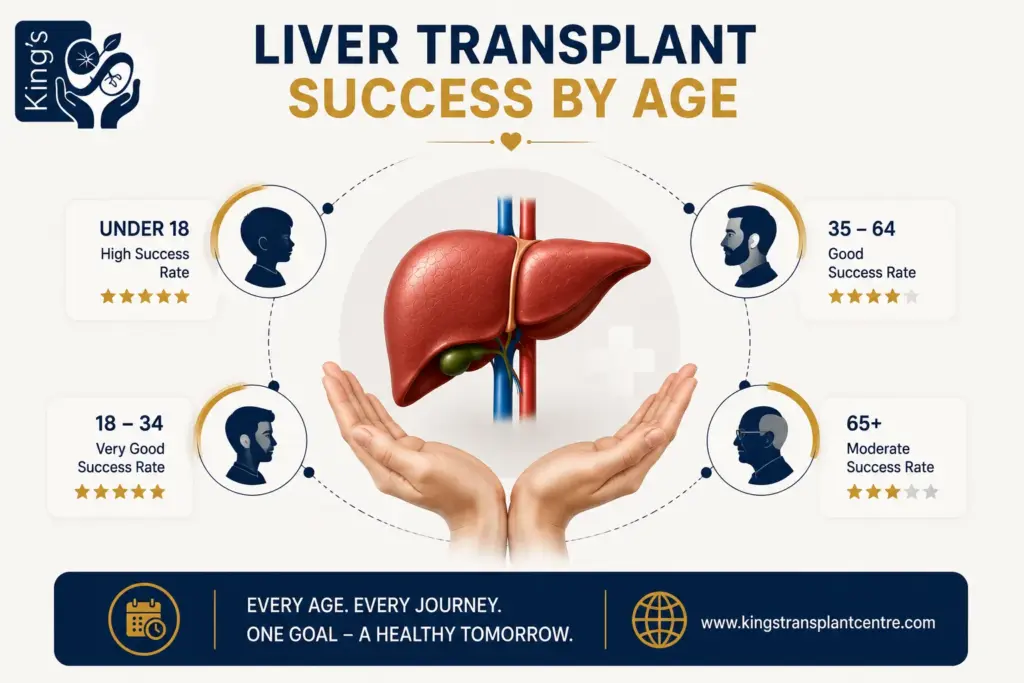
Liver Transplant Success Rate: Eye-Opening Statistics by Age Group
The leading registries, the Scientific Registry of Transplant Recipients (SRTR).
And the Organ Procurement and Transplantation Network (OPTN), provide clarity regarding transplant success rates. According to the statistics, liver transplants are effective across all ages.
Here’s a summary of the 1-year and 5-year liver transplant survival rate by age according to the recent data.
| Age Group | 1-Year Survival Rate | 5-Year Survival Rate | Average Recovery Time |
|---|---|---|---|
| Under 18 years | Around 94% | 85–90% | 4–8 weeks |
| 18–34 years | 89–92% | 80–85% | 6–8 weeks |
| 35–64 years | 87–90% | 75–80% | 2–3 months |
| Above 65 years | 77–80% | 65–70% | 3–4 months |
- Pediatric recipients – under 18 years
Children have higher survival rates than adults. The 1-year liver transplant survival rate is around 94%, and the 5-year survival rate is around 85 to 90%. Children’s resilience and our pediatric-focused protocols at King’s contribute to these splendid figures, often extending life expectancy by decades.
Young Adults – between 18 and 34 years
Young Adults achieve an 89% to 92% one-year survival rate and an 80% to 85% five-year survival rate. They also show very strong outcomes, especially when they follow aftercare and maintain a healthy lifestyle.
Middle-aged Adults – between 34 and 64 years
Middle-aged adults achieve an 87% to 90% one-year survival rate and 75% to 80% five-year survival rate. With comprehensive pre-transplant assessments, we optimize these outcomes for working-age patients.
Senior Citizens – Above 65 years
The liver transplant success rate for one year is around 77 to 80% and 65 to 70 % at 5 years. They can also achieve excellent results when carefully selected and medically optimized before the surgery.
for an overall understanding of liver transplant outcomes, survival rates, life expectancy, and recovery, read our guide on How Successful Are Liver Transplants?
What are the factors that influence liver transplant success rate?
The transplant success rate depends on many factors, not just age.
1. Overall Health Before Surgery
Patients who are stronger and healthier before surgery usually recover better.
2. Cause of Liver Failure
The reason for liver failure can affect transplant outcomes. Common causes include:
- Cirrhosis
- Fatty liver disease
- Hepatitis
- Genetic conditions
- Acute liver failure
3. Type of Donor
The type of transplant can influence recovery.
- Living donor transplant
- Deceased donor transplant
Living donor liver transplants may sometimes offer shorter waiting times and faster surgery.
4. Medication Adherence
Taking anti-rejection medicines exactly as prescribed is one of the most important factors affecting liver transplant life expectancy.
5. Lifestyle After Surgery
Healthy habits help protect the new liver.
Patients should:
- Avoid alcohol
- Eat a healthy diet
- Stay active
- Keep a healthy weight
- Attend regular check-ups
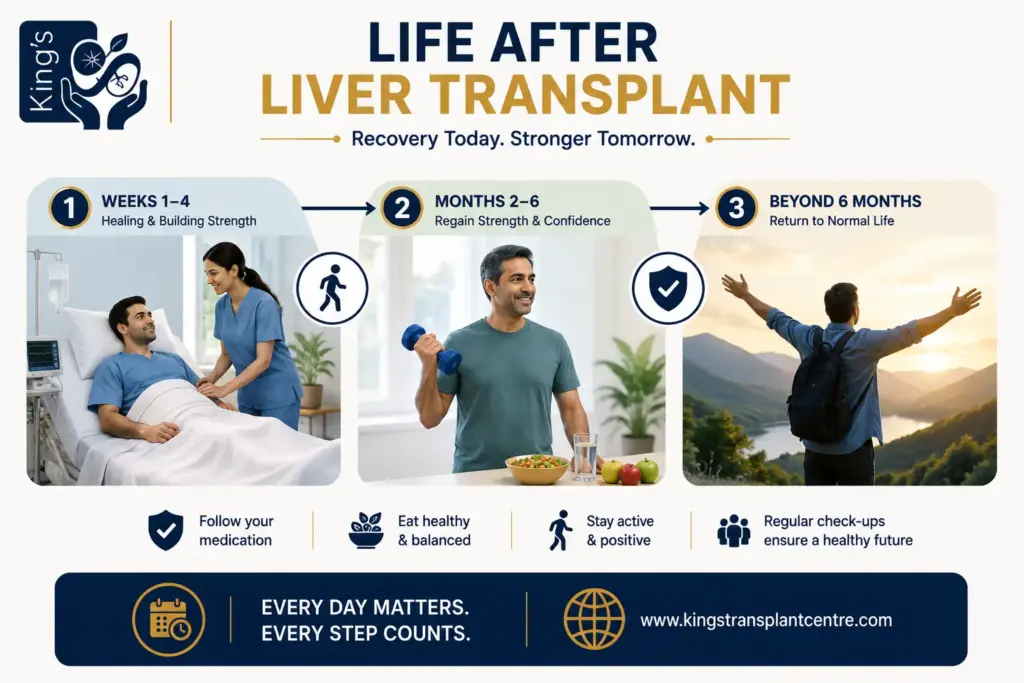
Charting Recovery: Milestones After Your Liver Transplant
Weeks 1–4
- Focus on wound healing
- Light walking and gentle activity
- Frequent blood tests and follow-up visits
- Nutrition support to help recovery
Months 2–6
- Increase exercise and strength
- Return to normal daily activities
- Continue medications and monitoring
- Many patients return to work or school
Beyond 6 Months
- Most patients return to a normal lifestyle
- Continue long-term follow-up care
- Maintain a healthy diet and exercise routine
- Protect the new liver with lifelong medication
Liver Transplant Life Expectancy: Extending Years with Quality
Apart from the immediate recovery, liver transplants offer long-term vitality. Depending on their age and lifestyle, patients enjoy 10 to 20 additional healthy years after a transplant.
The key influencers are,
- Lifestyle adjustments – Enhance outcomes with nutrition and exercise guided by our specialists.
- Adhere to medications – Lifelong immunosuppressants prevent rejection and boost liver transplant life expectation.
- Follow-up care – Regular monitoring catches issues early, sustaining high liver transplant survival rates.
Age Limit for Liver Donation: Clearing the Path for Generosity
The age limit for liver donation varies, but generally, healthy adults between 18 and 60 years are considered suitable candidates. Our specialists perform comprehensive evaluations to ensure the safety of both the donor and recipient.
To become a donor, a person must:
- Be healthy
- Have a compatible blood group
- Have no major liver disease
- Be physically and emotionally fit
At King’s, our living donor transplant program offers families the opportunity to save lives within their own circle guided by ethics, safety, and medical excellence.
Is Liver Transplant Safe? Balancing Risks with Proven Safeguards
Is liver transplant safe?, Most families and patients have this question while approaching a liver transplant procedure. However, with continuous advancements in medical and surgical technology, liver transplants are safer and more successful than before.
At King’s, the combination of expert surgical skill, advanced imaging technology, and world-class ICU care ensures that patients of all ages are in the safest hands possible.
Why King's: Dubai's Beacon for Liver Transplant Excellence
When it comes to liver transplant survival rate by age, results depend on where and how the surgery is performed.
At King’s Liver Transplant, we don’t just perform transplants; we restore lives!
☑️Dubai’s only hospital offering both living and deceased donor transplants
☑️Dedicated multidisciplinary transplant team available 24/7
☑️Advanced therapeutic endoscopy and interventional radiology services
☑️Tailored post-transplant rehabilitation for long-term health and stability
☑️Track record of success that mirrors top global transplant centers
FAQ
Are liver transplants successful?
Yes. Liver transplants have a high success rate of about 85–90% for the first year and are improving steadily with advanced techniques and post-care support.
What is the average liver transplant survival rate by age?
Younger patients often see slightly higher rates, but with proper care, adults and older recipients also achieve excellent outcomes at King’s.
Is liver transplant safe for elderly patients?
Yes, when carefully evaluated and optimized. Our specialists tailor treatment plans for older adults to ensure safety and long-term results.
What affects liver transplant life expectancy?
Factors such as medical condition, donor match, and commitment to post-transplant care
influence life expectancy.
What is the age limit for liver donation?
Typically, donors aged 18–60 can be considered, depending on their health and liver function.
What is the liver transplant success rate over age 60?
Most patients over 60 have a one-year survival rate of around 75–85%, depending on their health and medical condition.
Can a 70-year-old survive a liver transplant?
Yes. Many healthy adults over 70 can still have successful liver transplants if they are medically fit.
How long can you live after a liver transplant?
Many patients live 10–20 years or longer after liver transplant, especially when they take their medicines and follow a healthy lifestyle.
Are liver transplants successful in older adults?
Yes. Although recovery may take longer, older adults can still have excellent results after liver transplant.
How long does recovery take after a liver transplant?
Most patients begin feeling better within a few weeks, but full recovery may take between 2 and 6 months depending on age and health.
Overview
Lifelong partnership in Healing - Book your consultation!
Whether you’re evaluating your options or preparing for a transplant, our specialists are here to guide you at every step. At King’s Liver Transplant Centre of Excellence – Experience world-class expertise and proven outcomes!
Your path to renewal.