

How Long Does a Colonoscopy Take? A Complete Guide to Preparation, Procedure and Recovery

Hearing that you need a colonoscopy can bring up a mix of emotions. Some people worry about the preparation, while others are concerned about discomfort or how much time they will need to take away from work and daily activities. One of the most common questions patients ask is how long does a colonoscopy take.
The good news is that while a colonoscopy is an important medical procedure, it is generally straightforward, safe, and shorter than many people expect. In fact, the actual examination often takes less than an hour. However, the complete process includes bowel preparation, pre-procedure assessment, sedation, the examination itself, and colonoscopy recovery.
At King’s Transplant Centre, helping patients understand what to expect before, during, and after a colonoscopy is an important part of providing quality care.
What is a Colonoscopy?
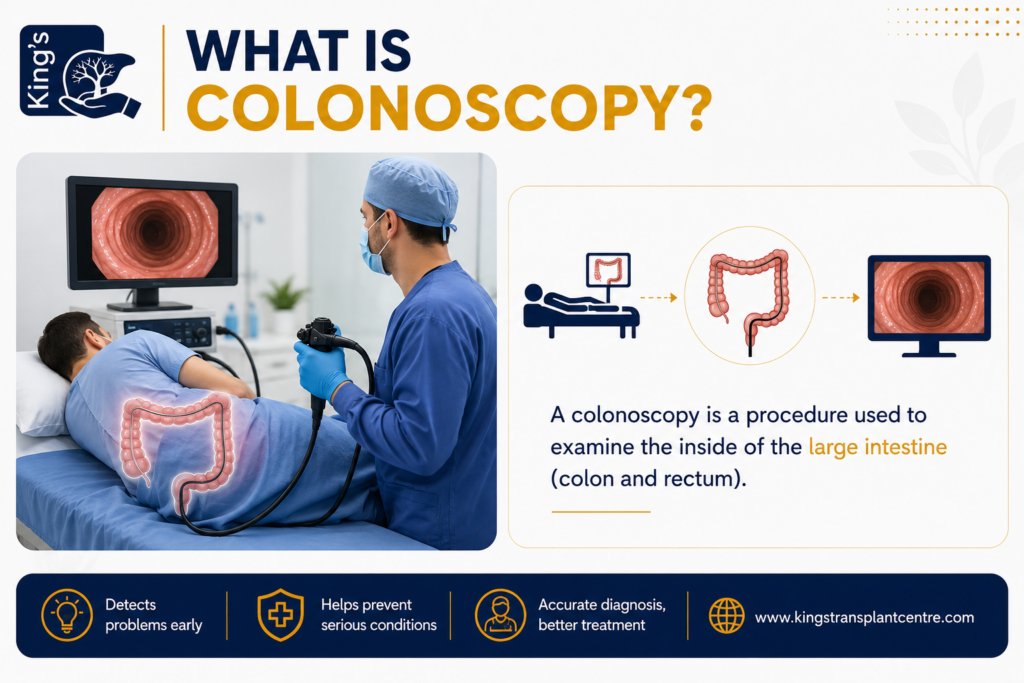
During a colonoscopy, a specialist uses a flexible tube known as a colonoscope to take a close look at the inside of the colon and rectum. The colonoscope contains a small camera and light source that transmit images to a monitor, allowing the physician to identify abnormalities that may not be visible through other diagnostic tests.
There are several reasons a doctor may recommend this procedure:
- To screen for colorectal cancer as a precautionary measure
- To detect and remove polyps before they cause problems
- To look into rectal bleeding that needs further investigation
- Looking into chronic diarrhoea or constipation that persists
- Examining abdominal pain without a clear cause
- Monitoring inflammatory bowel diseases, including Crohn’s disease and ulcerative colitis
According to the American Cancer Society, colorectal cancer is one of the most commonly diagnosed cancers in the United States. Regular screening plays a significant role in detecting abnormalities early, often before symptoms develop.
When should you consider a Colonoscopy?
Many patients wonder when should you get a colonoscopy.
For individuals with average risk, screening generally begins at age 45. Your doctor might recommend getting tested sooner than usual if you have:
- A family history of colorectal cancer
- A history of colon polyps
- Inflammatory bowel disease
- Certain inherited genetic conditions
- Unexplained digestive symptoms
A consultation with a qualified colonoscopy doctor can help determine the most appropriate and accurate screening schedule based on your individual risk factors.
Also Read – Understanding grade 1 fatty liver
The importance of proper preparation
Before discussing the procedure itself, how long does a colonoscopy take it is important to understand How Long Does a Colonoscopy Take? that a successful colonoscopy begins long before you arrive at the hospital or endoscopy center.
Many specialists say that prep for colonoscopy is the most critical part of the entire process.
The purpose of bowel preparation is to completely empty the colon so that the physician can clearly visualize the intestinal lining. Even small amounts of residual stool can make it difficult to detect polyps or other abnormalities.
What does Colonoscopy preparation involve?
Preparation instructions vary slightly between healthcare providers, but they generally include:
- Following a low-fiber diet for several days
- Avoiding seeds, nuts, and certain vegetables
- Consuming only clear liquids the day before the procedure
- Taking a prescribed bowel-cleansing solution
- Drinking plenty of water to prevent dehydration
One question patients frequently ask is, how many hours before a colonoscopy should you stop eating?
Stopping solid food the day before is standard practice for most patients, with clear liquids generally allowed until a few hours before the procedure takes place. Your physician will provide specific instructions based on the type of preparation being used.
Although bowel preparation is often considered the least enjoyable part of the process, it directly impacts the quality and accuracy of the examination.
What happens on the day of the procedure?
The day of the procedure usually begins with registration and a review of your medical history.
A nurse will:
- Confirm your medications
- Review allergies
- Check vital signs
- Verify that the preparation instructions were followed
- Answer any remaining questions
An intravenous line is inserted into a vein, typically in the arm or hand, to administer fluids and the sedative medications needed for the procedure.
Most patients spend approximately 30 to 60 minutes in the preparation area before being taken to the procedure room.
A detailed look at the procedure
Many people searching for information about how long is a colonoscopy are actually interested in understanding what happens during the examination itself.
Let’s walk through the process step by step.
Step 1: Administration of sedation
Before the colonoscopy begins, sedative medication is administered through the IV line. Sedation options differ from one facility to another and from patient to patient, ranging from moderate sedation all the way through to deeper anaesthesia administered by a trained anaesthesia professional.
Within minutes, patients become relaxed and drowsy. Many remember very little about the procedure afterwards.
Step 2: Positioning
Once sedation takes effect, you will be positioned on your left side with your knees gently bent toward your chest.
This position allows the physician to advance the colonoscope more easily through the colon.
Step 3: Insertion of the Colonoscope
The physician carefully inserts the lubricated colonoscope through the rectum and begins advancing it through the large intestine. The scope is flexible and specifically designed to navigate the natural curves of the colon.
A small amount of air or carbon dioxide is carefully introduced into the colon as part of the examination process. This gently expands the colon walls and improves visibility.
Step 4: Inspection of the Colon
As the scope advances, the physician carefully examines the entire lining of the colon. This stage is often the most important part of the procedure.
The specialist looks for:
- Polyps
- Inflammation
- Ulcers
- Bleeding sites
- Abnormal tissue growth
- Early signs of cancer
Every section of the colon is examined methodically to ensure nothing is missed.
Step 5: Polyp Removal and Biopsy
If polyps are found, they can often be removed immediately during the procedure. This is one reason colonoscopy is unique among screening tests, it can identify and treat certain abnormalities at the same time.
The physician may also collect tissue samples, known as biopsies, for laboratory analysis. Patients typically do not feel these interventions because of sedation and because the lining of the colon has very limited pain sensation.
Step 6: Withdrawal of the scope
Having reached the beginning of the colon, the physician then carefully and slowly withdraws the colonoscope. Interestingly, much of the detailed inspection occurs during this withdrawal phase.
The specialist carefully examines the colon lining once again while removing the scope to ensure no abnormalities are overlooked.
How long does the procedure usually last?
For most patients, how long does a colonoscopy take depends on whether additional interventions are needed.
Procedure component | Average time |
Sedation administration | 10 –15 minutes |
Colonoscope insertion and examination | 20 – 45 minutes |
Polyp removal or biopsies | Additional 10 – 20 minutes |
Recovery room monitoring | 30 – 90 minutes |
The actual colonoscopy generally lasts between 20 and 45 minutes. If multiple polyps are removed or biopsies are collected, the procedure may take longer.
Does a colonoscopy hurt?
One of the biggest fears surrounding colonoscopy is discomfort. Patients often ask, does a colonoscopy hurt?
For most individuals, the answer is no. Because sedation is commonly used, patients are typically relaxed and comfortable throughout the examination.
Some people experience:
- Mild abdominal pressure
- Temporary bloating
- Cramping from the introduced air
These sensations are usually mild and short-lived.
What if an Endoscopy is performed at the same time?
In some situations, physicians recommend performing both procedures during a single visit. Patients often ask, how long does a colonoscopy and endoscopy take when done together.
When combined, the total procedure time usually ranges from 45 to 90 minutes, depending on the complexity of the findings and whether biopsies are required.
Is there a difference for women?
Another common question is how long does a female colonoscopy take. In most cases, the procedure duration is very similar for men and women.
Factors that may occasionally influence timing include:
- Previous pelvic surgery
- Anatomical variations
- Presence of scar tissue
- Additional procedures performed during the examination
However, gender alone does not significantly affect procedure length.
What happens during Colonoscopy recovery?
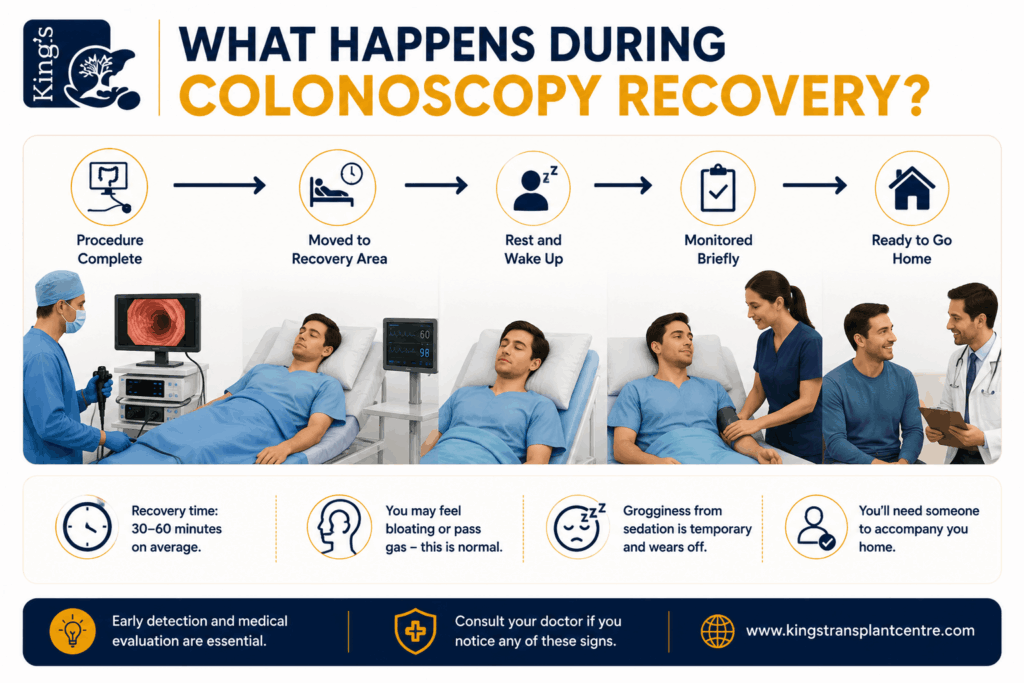
Following the examination, patients are transferred to a recovery area where medical staff monitor them as the sedative medications wear off.
This stage of colonoscopy recovery is usually straightforward.
You may experience:
- Mild grogginess
- Temporary bloating
- Passing gas
- Mild abdominal discomfort
At King’s Transplant Centre these symptoms generally resolve within a few hours.
Recovery Timeline
Time after procedure | What to expect |
First hour | Sedation wears off |
Same day | Rest and hydration recommended |
Next day | Most normal activities resumed |
Several days later | Biopsy results may be available |
Because sedation can affect judgment and reflexes, patients should not drive themselves home after the procedure.
Benefits of Colonoscopy
The benefits of colonoscopy extend far beyond diagnosis.
Advantages include:
- Early cancer detection
- Prevention through polyp removal
- Investigation of digestive symptoms
- Accurate visualization of the colon
- Ability to obtain tissue samples during the same procedure
This combination of diagnosis and treatment makes colonoscopy one of the most valuable tools in gastrointestinal healthcare.
Making your Colonoscopy experience less stressful
Understanding how long does a colonoscopy take can help remove much of the uncertainty surrounding the procedure. While the examination itself often lasts less than an hour, the overall experience, including prep for colonoscopy, sedation, and colonoscopy recovery, typically takes several hours.
Whether you are undergoing routine screening or investigating digestive symptoms, working with an experienced colonoscopy doctor ensures you receive appropriate guidance throughout every stage of the process.
At King’s Transplant Centre, patient education remains an important part of care, helping individuals feel informed, prepared, and confident before undergoing this important screening procedure.
If you’re experiencing digestive symptoms or need colorectal screening, book a consultation with our Gastroenterology specialists.
FAQs
How long does a colonoscopy take from start to finish?
Most patients are in and out within two to three hours, even though the examination itself only takes between 20 and 45 minutes. The rest of the time is simply preparation before and recovery afterwards.
How long is a colonoscopy if polyps are removed?
Polyp removal can extend the procedure by around 10 to 20 minutes, with the exact time depending on the number of polyps, their size, and their location.
Does a colonoscopy hurt during the procedure?
Most patients receive sedation and experience little to no discomfort. Some may notice mild bloating or cramping afterwards.
How many hours before a colonoscopy should you stop eating?
Most patients stop eating solid foods the day before the procedure, though exact instructions vary based on the preparation plan prescribed by their physician.
How long does a colonoscopy and endoscopy take when performed together?
When both procedures are completed during the same appointment, the total procedure time is usually between 45 and 90 minutes.
How long does a female colonoscopy take?
The procedure generally takes the same amount of time for women as it does for men, although individual anatomy and medical history may influence duration.
Overview
Safeguarding Your Digestive Health with King's Transplant Centre
A colonoscopy is one of the most effective ways to detect colorectal cancer, remove precancerous polyps, and identify digestive conditions at an early stage. Timely screening can help prevent serious complications before symptoms appear.
Whether you’re experiencing persistent digestive symptoms or are due for routine screening, our experienced specialists provide safe, accurate, and patient-focused colonoscopy services using advanced diagnostic technology.
Your digestive health matters. Schedule your consultation with King’s Transplant Centre and take a proactive step toward early detection and better gastrointestinal health.