

How Do You Get Autoimmune Liver Disease?

Liver conditions are often linked to alcohol use, infections, or lifestyle habits. But what happens when the body’s own immune system begins attacking healthy liver cells by mistake? This is the reality for people living with autoimmune liver disease, a group of conditions where the immune system causes ongoing inflammation and damage within the liver.
Many people are caught off guard by the diagnosis because the condition often develops slowly and quietly in the beginning. Some may struggle with constant tiredness, unexplained changes in weight, itching, skin rashes, digestive issues, or abnormal liver test results picked up during a regular health check. Others may not realize anything is wrong until the liver has already been affected more significantly.
Knowing how autoimmune liver disease develops, understanding who may be more vulnerable to it, and recognizing the value of early diagnosis can make a meaningful difference to long-term liver health. With proper treatment, regular monitoring, and specialist support, many patients are able to control the condition well and continue leading active, healthy lives.
What's Autoimmune Liver Disease?
Liver autoimmune disease develops when the immune system mistakenly attacks healthy liver tissue.
Autoimmune hepatitis is the most recognized form of autoimmune liver disease. It occurs when the immune system mistakenly attacks healthy liver tissue, causing inflammation that may gradually damage the liver over time.
The term “autoimmune liver disease” may also include other immune-related liver disorders, such as:
- Primary Biliary Cholangitis (PBC)
- Primary Sclerosing Cholangitis (PSC)
- Overlap syndromes involving more than one autoimmune liver condition
An autoimmune disease of the liver may cause long-term inflammation if not diagnosed and treated early.
Without proper treatment, ongoing inflammation may lead to liver scarring, cirrhosis, or liver failure in some patients.
How do you get Autoimmune Liver Disease?
There is no single known cause behind autoimmune liver disease. Researchers believe it develops due to a combination of genetic, environmental, and immune-related factors.
Common factors linked to autoimmune liver disease-
Possible Factor | How It May Contribute |
Genetics | Certain inherited genes may increase the risk |
Viral infections | Some infections may trigger abnormal immune responses |
Hormonal influence | Women are more commonly affected |
Environmental triggers | Certain medications or toxins may contribute |
Existing autoimmune disorders | People with thyroid disease, lupus, or rheumatoid arthritis may have a higher risk |
Many patients ask, “Is autoimmune hepatitis genetic?” While the disease itself is not directly inherited in a predictable way, a family history of autoimmune conditions can increase susceptibility.
How rare is Autoimmune Hepatitis?
Autoimmune hepatitis is considered relatively uncommon compared to other liver diseases. However, awareness and diagnosis rates have improved significantly in recent years.
The condition can affect:
- Children
- Teenagers
- Adults
- Older individuals
Women are diagnosed more frequently than men, although the condition can affect anyone.
Symptoms of Autoimmune Liver Disease
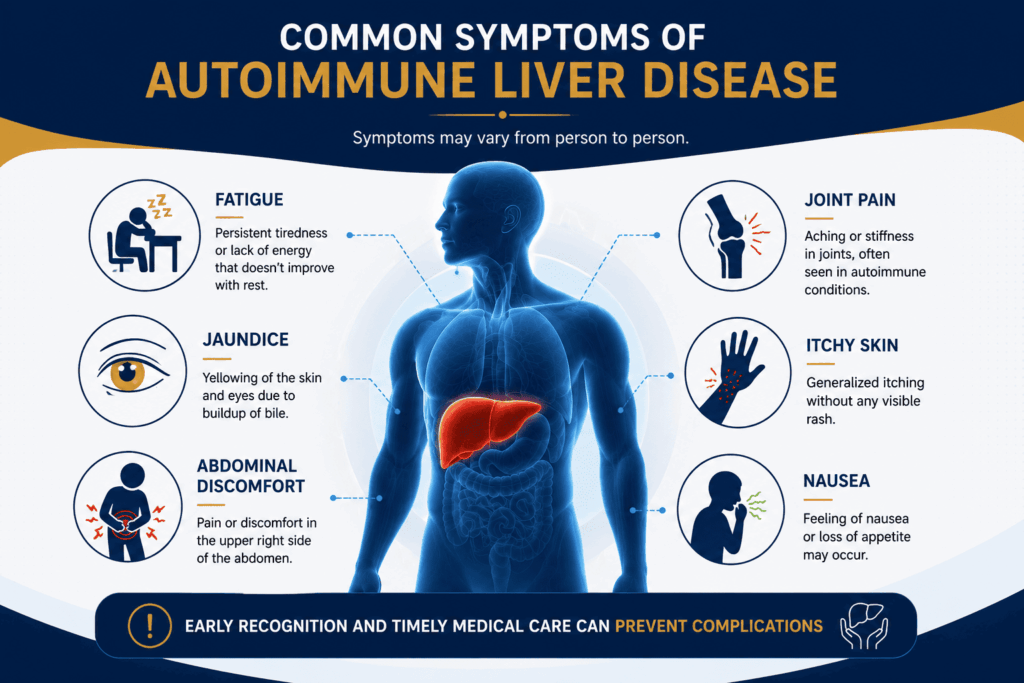
Common symptoms include:
- Ongoing fatigue
- Abdominal discomfort
- Joint pain
- Yellowing of the skin or eyes
- Dark urine
- Nausea
- Loss of appetite
- Unexplained itching
- Enlarged liver
- Irregular menstrual cycles in women
Autoimmune Liver Disease Rash
Some patients develop skin-related symptoms such as:- Red or blotchy rashes
- Itchy skin
- Small visible blood vessels on the skin
- Increased skin sensitivity
Autoimmune Liver Disease and weight gain
Weight changes may occur for several reasons during liver disease treatment and progression.
Possible reasons for weight gain-
Cause | Explanation |
Fluid retention | Advanced liver disease may cause swelling |
Steroid medications | Certain treatments may increase appetite |
Reduced activity levels | Fatigue may reduce physical movement |
Hormonal changes | Chronic inflammation may affect metabolism |
Not every patient experiences autoimmune liver disease and weight gain, but unexpected changes in body weight should always be discussed with a liver specialist.
Autoimmune Hepatitis stages
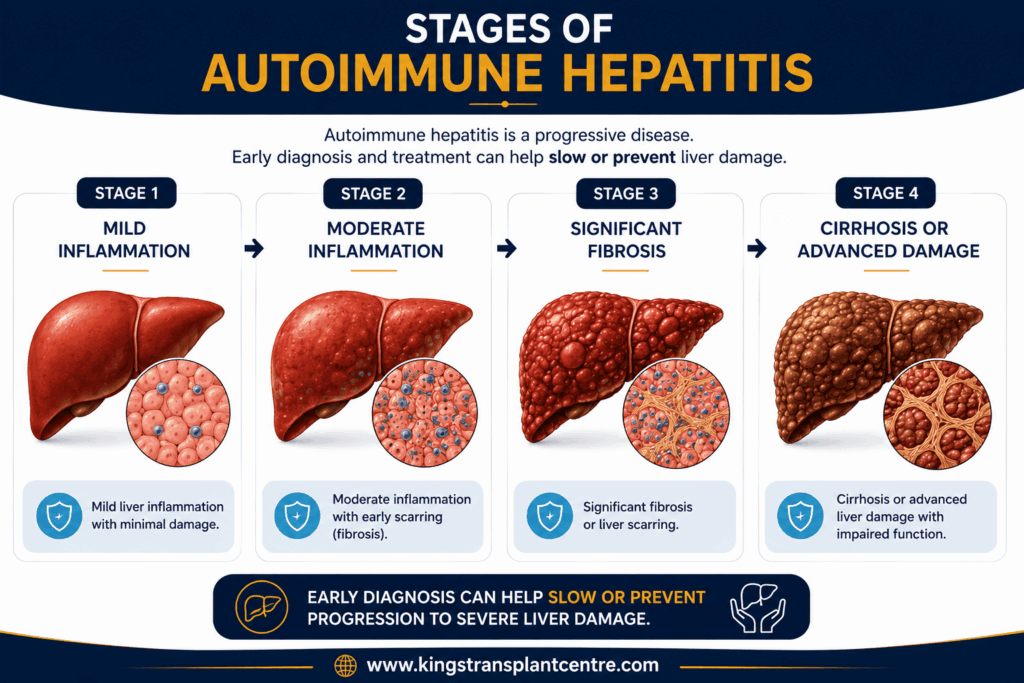
The disease may progress gradually over time if inflammation continues unchecked.
Stages of Autoimmune Hepatitis
| Stage | Description |
| Stage 1 | Mild liver inflammation |
| Stage 2 | Moderate inflammation with early scarring |
| Stage 3 | Significant fibrosis or liver scarring |
| Stage 4 | Cirrhosis or advanced liver damage |
Early diagnosis can help slow or prevent progression to severe liver damage.
Autoimmune Liver Disease tests
Proper evaluation is essential because symptoms may resemble many other liver conditions.
Common autoimmune liver disease tests:-
- Blood tests
- Autoantibody screening
- Immunoglobulin testing
- Imaging studies such as ultrasound or MRI
- FibroScan
- Liver biopsy in certain cases
These autoimmune liver disease tests help specialists confirm the condition, understand how much the liver has been affected, and plan the most suitable treatment approach for the patient.
Is Autoimmune Hepatitis contagious?
Patients often ask, “Is autoimmune hepatitis contagious?” The condition is not infectious and cannot spread from one person to another.
The answer is no.
Autoimmune Hepatitis is not contagious. It cannot spread through:
- Physical contact
- Sharing food
- Blood exposure
- Coughing or sneezing
The condition develops because of abnormal immune system activity rather than infection.
Can Autoimmune Disease kill you?
Many patients understandably feel anxious after receiving the diagnosis. However, autoimmune liver disease can become serious when inflammation continues for a long time without proper treatment or monitoring. In some patients, ongoing liver damage may gradually lead to:
- Advanced liver scarring (cirrhosis)
- Liver failure
- Increased pressure in the liver blood vessels (portal hypertension)
- Serious infections due to reduced liver function
- Liver cancer occurs in a small number of advanced cases
Patients who receive timely care often achieve good long-term disease control and improved outcomes.
Autoimmune Liver Disease life expectancy
Autoimmune liver disease life expectancy depends on several factors:
- How early the condition is diagnosed
- Response to medication
- Degree of liver damage
- Presence of cirrhosis
- Regular monitoring and follow-up
Many patients who begin treatment early can live long and active lives with proper medical management.
How is Autoimmune Liver Disease treated?
Treatment focuses on reducing inflammation and preventing further liver damage.
Treatment | Purpose |
Corticosteroids | Reduce liver inflammation |
Immunosuppressive medications | Control immune system activity |
Lifestyle adjustments | Support liver health |
Monitoring and follow-up | Track disease progression |
Liver transplantation | Considered in advanced cases |
Long-term follow-up is often important because autoimmune liver conditions may flare up again even after periods of improvement.
Why early diagnosis matters?
Many autoimmune liver diseases begin quietly. Delayed diagnosis may increase the risk of permanent liver damage.
You should consider seeing a doctor if you notice:
- Constant tiredness
- Yellowing of the skin or eyes
- Persistent itching
- Liver blood test results that continue to remain abnormal
- Swelling in the abdomen, legs, or feet
- Ongoing digestive problems that do not seem to settle properly
Early specialist care can make a major difference in preserving liver function and improving long-term health.
FAQs
What causes autoimmune liver disease?
The exact cause is not fully known. Genetics, immune system dysfunction, infections, and environmental triggers may all play a role.
Is autoimmune hepatitis hereditary?
The disease itself is not directly inherited, but a family history of autoimmune conditions may increase the risk.
Can autoimmune liver disease be cured?
There is currently no permanent cure, but many patients achieve good disease control with proper treatment and monitoring.
Is autoimmune hepatitis contagious?
No. Autoimmune hepatitis is not caused by infection and cannot be spread from person to person.
What are the early signs of autoimmune liver disease?
Fatigue, abdominal discomfort, itching, abnormal liver tests, and jaundice are some early warning signs.
Can autoimmune liver disease affect life expectancy?
Yes, advanced untreated disease can affect survival. However, many patients live long lives with early diagnosis and treatment.
Does autoimmune liver disease cause a skin rash?
Yes. Some patients may develop itching, redness, or skin rashes associated with liver inflammation.
What tests diagnose autoimmune liver disease?
Blood tests, liver function tests, imaging scans, antibody testing, and liver biopsy may all help confirm the diagnosis.
Can autoimmune liver disease lead to liver failure?
Yes, severe, untreated inflammation may eventually progress to cirrhosis or liver failure in some patients.
Who is more likely to develop autoimmune hepatitis?
Women and individuals with other autoimmune disorders are more commonly affected, although the disease can occur in anyone.
Overview
Advanced Liver Care at King’s Transplant Centre
King’s Transplant Centre provides advanced care for patients dealing with complex liver conditions, including autoimmune liver disorders and advanced liver disease.
What Makes King’s Transplant Centre Different?
- Multidisciplinary care involving hepatologists, liver transplant surgeons, radiologists, intensivists, and transplant coordinators
- Specialists with extensive experience in managing complex and advanced liver conditions
- Access to advanced liver imaging, diagnostic evaluation, and transplant assessment services
- Individual treatment plans based on the patient’s symptoms, liver function, and stage of disease
- Strong expertise in treating complicated liver disorders requiring long-term medical management
- Liver transplant support and intervention options for eligible patients
- Ongoing follow-up, regular monitoring, and continued patient support throughout treatment and recovery
The team at King’s Transplant Centre focuses on identifying liver conditions in a timely manner, monitoring disease progression, and creating treatment plans that support both immediate care and long-term liver health.
Living well with Autoimmune Liver Disease starts with timely care
Autoimmune liver disease is not always easy to recognize in the early stages because the symptoms often develop gradually. Many people mistake the initial signs for everyday tiredness, digestive discomfort, or temporary health issues. Ongoing fatigue, mild pain or heaviness in the upper abdomen, abnormal liver test results, or slight yellowing of the skin and eyes may seem minor at first and are often overlooked. Because of this, the condition may remain undiagnosed for some time until the symptoms become more noticeable and start affecting overall health and daily life.
Although the exact cause of autoimmune liver disease is still being studied, doctors believe the condition may develop due to a combination of immune system dysfunction, genetic susceptibility, and environmental triggers.
If you are experiencing persistent fatigue, unexplained liver test abnormalities, jaundice, itching, or ongoing digestive symptoms, seeking specialist evaluation at the right time can make an important difference. King’s Transplant Centre offers comprehensive care for autoimmune liver disease, supported by experienced liver specialists, advanced diagnostic services, and personalized long-term treatment planning focused on protecting liver function and improving patient outcomes.