

Kidney Transplant in Dubai
Kidney Transplant in Dubai

- Home
- Kidney Transplant Services
- Kidney Transplant in Dubai
When your kidneys can no longer work well enough to support your health, everyday life can become difficult.
Ongoing fatigue, fluid retention, dietary restrictions, and regular dialysis can affect your work, routines, and time with family. For some patients with end-stage kidney disease, a kidney transplant in Dubai may offer an alternative to long-term dialysis and the possibility of a more active daily life.
At King’s Transplant Centre of Excellence, kidney transplant surgery is planned around each patient’s medical needs. Our multidisciplinary team brings together transplant surgeons, nephrologists, anaesthetists, and other specialists to assess your suitability for transplantation, prepare you for surgery, and provide care throughout recovery.
What is Kidney Transplant Surgery?
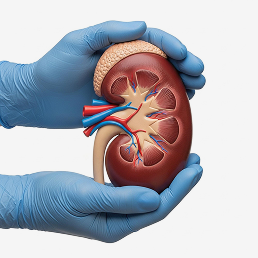
A kidney transplant surgery involves placing a healthy donor kidney into a patient whose own kidneys can no longer function adequately. In most cases, the native kidneys remain in place unless there is infection, severe hypertension, or another complication that requires removal.
The donor kidney is placed usually in the lower abdomen and connected to nearby blood vessels and the bladder. This allows blood to flow through the new kidney and urine to pass into the bladder.
Who may need a Kidney Transplant?
A kidney transplant is considered for patients who have:
- End-stage renal disease
- Advanced chronic kidney disease with a severely reduced filtration rate
- Kidney failure caused by diabetes or long-standing high blood pressure
- Polycystic kidney disease
- Glomerulonephritis, which affects the kidney’s filtering units
- Kidney damage related to lupus
For many people, a transplant allows greater freedom and a more active life compared with staying on dialysis long term.

Types of Kidney Transplant in Dubai
At King’s Transplant Centre of Excellence, the type of kidney transplant you may be suitable for depends on your kidney disease, overall health, donor availability, and compatibility. Our transplant team assesses each case individually and discusses the most appropriate option with you:
Living donor transplant
A healthy person, often a family member or someone close to the patient, donates one kidney. When the donor is a suitable match, the transplant can be scheduled in advance.
Deceased donor transplant
The kidney is donated after the donor’s death and matched with a suitable recipient. Blood group, tissue compatibility, and other medical factors are considered when allocating the kidney.
Paired kidney exchange (paired donation) for incompatible donor-recipient pairs
When a willing donor is not a suitable match for their intended recipient, paired kidney exchange offers another option. Two or more incompatible donor-recipient pairs are matched so that each recipient receives a compatible kidney while every donor is still able to help save a life.
Highly sensitised recipients, including desensitisation protocols for selected donor-specific antibody profiles
Some patients have antibodies that make finding a compatible kidney more difficult. Carefully planned desensitisation protocols may help reduce these antibodies in selected cases, improving the chances of a successful transplant after thorough evaluation.
Kidney re-transplantation
If a previous kidney transplant stops working, you may be able to have another transplant. Your doctor will check your health, transplant history, antibody levels, and donor match to see if re-transplantation is suitable.
Combined liver-kidney transplantation
When both the liver and kidneys are severely affected, a combined liver-kidney transplant may be an option for selected patients. Care is planned by the liver and kidney transplant teams based on the patient’s individual needs.
Each case undergoes thorough compatibility testing. It includes blood group matching, tissue typing, and cross-matching to reduce rejection risk.
How long does Kidney Transplant Surgery take?
Kidney transplant surgery in Dubai usually takes around 3–5 hours. The exact time can vary depending on your health, previous surgeries, and individual anatomy.
After surgery, you will stay in hospital for several days so your team can monitor your recovery and kidney function. Some transplanted kidneys start working straight away, while others may take a few days to begin producing urine properly.
Kidney Transplant Services
Meet Our kidney specialists in Dubai


Kidney Transplant success rate
The kidney transplant success rate depends on several factors, including donor type, recipient health, and medication adherence.
Globally, one-year survival rates after kidney transplantation exceed 90–95% in established centers. Living donor transplants often demonstrate slightly higher long-term graft survival compared to deceased donor transplants.
For patients questioning, ‘’Is kidney transplant safe?’’
When performed in a specialized center with appropriate screening and follow-up, kidney transplantation is considered a safe and well-established treatment for advanced kidney failure.
At King’s Transplant Centre of Excellence, our transplant protocols follow international standards, supported by advanced ICU care and structured follow-up programs.
How long does a Kidney Transplant last?
Patients frequently ask, ‘’How long does a kidney transplant last?’’
- A kidney from a living donor may last around 12–20 years.
- A kidney from a deceased donor may last around 8–12 years.
Outcomes vary based on age, medical conditions, medication adherence, and lifestyle factors.
If a transplanted kidney eventually fails, dialysis can resume, and in selected cases, a second transplant may be considered.
Patients also ask, ‘’How many kidney transplants can a person have?’’ In suitable candidates, more than one transplant is possible over a lifetime.
Kidney Transplant age limit
There is no fixed upper age limit for a kidney transplant. What matters more is your overall health and whether you are fit enough for the surgery and long-term treatment.
Doctors may assess your heart health, other medical conditions, infection risk, and ability to take anti-rejection medicines as prescribed. Both younger and older adults may be considered when transplantation is medically appropriate.
Recovery after Kidney Transplant Surgery
Recovery typically takes about six weeks, though this varies from patient to patient.
Patients are advised to:
- Avoid heavy lifting for several weeks
- Monitor blood pressure and weight daily
- Take immunosuppressive medications exactly as prescribed
- Avoid exposure to infections
Many patients ask about the right sleeping position after a kidney transplant. In the first few weeks, it is sensible to avoid lying directly on the side where the new kidney was placed. Most people feel more comfortable sleeping on their back or on the opposite side until the incision has healed and tenderness has settled.
After leaving the hospital, you will need regular check-ups and blood tests. These help your doctors monitor the new kidney, adjust your medicines, and spot problems such as rejection or infection early.
Risks and safety
Every major surgery has risks, and kidney transplant surgery is no different.
Potential risks include:
- Bleeding
- Infection
- Clots
- Urine leakage or blockage
- Delayed graft function, where the new kidney takes time to “wake up,” and you may need temporary dialysis
- Rejection occurs when the immune system tries to attack the transplanted kidney
To protect the new kidney, you will need immunosuppressive medicines for life. These medicines lower your body’s defenses, which can make infections more likely. That is why follow-up is not optional. It is how we adjust doses, track kidney function, and catch concerns early.
For most eligible patients, the improved quality of life after a successful transplant is worth the risk, especially when care is planned and monitored closely.
Kidney Transplant cost in Dubai
Patients often ask, ‘’How much does a kidney transplant cost?’’
The kidney transplant cost in Dubai varies depending on:
- Donor type
- Pre-transplant evaluation
- Surgical complexity
- ICU stay
- Medications
- Length of hospitalization
After your evaluation, the transplant team can provide a more personalized estimate based on your treatment plan. At King’s Transplant Centre of Excellence, the financial aspects of your care are discussed with you as part of the transplant planning process.
Why Choose King’s Transplant Centre of Excellence?
King’s Transplant Centre of Excellence is internationally recognized for complex transplant care. Our transplant program offers:
- Complete evaluation: Pre-transplant tests, assessments, CT scans, and MRI scans can be arranged within the centre.
- Specialist team: Transplant surgeons, nephrologists, and intensive care specialists are involved in your care.
- Follow-up care: Regular blood tests and appointments help monitor kidney function and medicines.
- International patient support: Dedicated coordinators assist with appointments, documentation, and travel arrangements.
- Established protocols: Care follows recognised transplant practices for assessment, surgery, and recovery.
The centre has extensive experience in liver transplantation, with transplant facilities and multidisciplinary expertise that also support kidney transplantation. This allows care to remain coordinated from the initial assessment through long-term follow-up.
A future beyond Dialysis
Kidney failure can place major limits on your daily life. For suitable patients, a kidney transplant can reduce or remove the need for dialysis and make everyday routines easier to manage.
If you are considering kidney transplant surgery in Dubai, the team at King’s Transplant Centre of Excellence can support you through the assessment process, donor and compatibility testing, surgery, recovery, and ongoing follow-up care.
Speak with our transplant coordinators to discuss your eligibility, treatment options, and what you can expect from kidney transplantation.
FAQs
Kidney transplant surgery usually takes around 3–4 hours, although the exact time can vary depending on the patient and the complexity of the procedure. You will also spend additional time in the operating and recovery areas before returning to your hospital room.
A kidney transplant can provide many years of improved health and a more active life. How long a transplanted kidney lasts varies from person to person and depends on factors such as the donor type, your overall health, kidney function, and how well you take your anti-rejection medicines. Regular follow-up helps protect the transplanted kidney for as long as possible.
The process starts with a medical assessment to see if a transplant is suitable for you. If you have a living donor, compatibility tests are done to check the match. For a deceased donor kidney, allocation follows established medical and matching criteria.
The donor kidney is placed in the lower abdomen and connected to blood vessels and the bladder. It may start making urine once blood flow is restored. Your own kidneys are usually left in place. You will need medicines to prevent rejection after surgery.
Yes, but there may be some limits on visitors during the first few days after surgery. Anti-rejection medicines lower your immune defences, so it is important to avoid infections. Your hospital will let you know when visitors are allowed and may ask anyone who is unwell not to visit.
You will stay in hospital while your team monitors the transplanted kidney, incision, blood pressure, fluid balance, and medication levels. Once home, you will need regular blood tests and follow-up appointments and must take your immunosuppressive medicines as prescribed. Recovery continues over the following weeks, with activity gradually increasing as your surgical team advises.
A kidney transplant may be recommended when the kidneys have reached advanced or end-stage kidney disease and can no longer perform their essential functions adequately. For suitable patients, transplantation can replace kidney function and may offer greater freedom from dialysis.
It depends on your insurance plan. Some plans cover the transplant, hospital stay, medicines, and follow-up care. Others may have exclusions or require prior approval. Check with your insurer before treatment.