

Pediatric Kidney
Pediatric Kidney Transplant

- Home
- Kidney Transplant Services
- Pediatric Kidney Transplant
If a child’s kidneys no longer function normally, normal activities such as elimination of waste, fluid balance and normal growth and development are hampered. In children with chronic kidney disease or kidney failure, the consequences of these include nutrition, growth and life quality issues.
A Pediatric Kidney Transplant Dubai is often considered the most effective long-term treatment for children with end-stage kidney disease.
Instead of lifelong dialysis, a transplant can restore kidney function, allowing many children to grow, attend school regularly, and lead a more active life. At King’s Transplant Centre, care is focused not only on the procedure itself but also on supporting the child and family throughout the journey.
What is a pediatric kidney transplant?
A pediatric kidney transplant Dubai is a life-saving procedure in which a healthy donor kidney replaces a child’s failing kidneys, helping their body function normally. The donated kidney takes over the role of filtering waste, balancing fluids, and regulating essential body functions.
In most cases, the child’s original kidneys are not removed unless medically necessary. The donor kidney is usually placed in the lower abdomen and attached to the nearby blood vessels and the bladder so it can function normally.
Advances in transplant medicine mean that survival rates for pediatric kidney transplants have improved significantly over the past few decades, and transplantation is generally considered the preferred treatment over long-term dialysis when possible.
Common causes of kidney failure in children
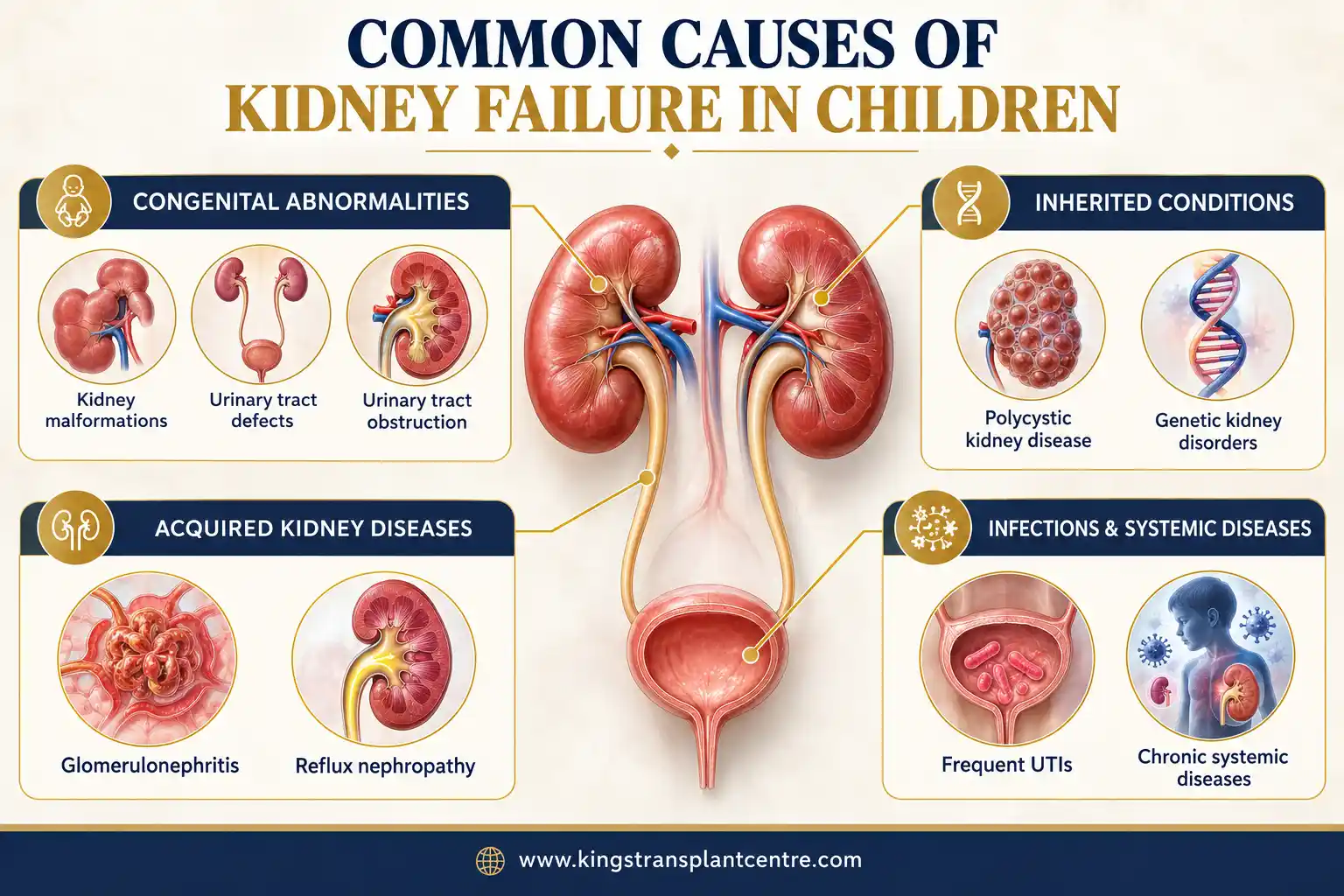
Children typically suffer kidney failure because of existing diseases, not their lifestyle. Most often they can result from abnormalities present at birth in the kidneys or in the tube through which the urine is passed, which disrupts the normal kidney function; or from inherited conditions, such as polycystic kidney disease or genetic disorders of kidney function.
Conditions such as glomerulonephritis (inflammation of the filtering units of the kidneys), reflux nephropathy (backward flow of urine), frequent and intense urinary tract infections, and some systemic diseases which do harm to the kidneys over time.
In some cases, prolonged obstruction of the urinary tract or complications from chronic diseases can gradually lead to end-stage kidney disease, making a pediatric kidney transplant necessary.
Who is an ideal candidate for a pediatric kidney transplant?
A child may be considered for a transplant if they have:
- End-stage kidney disease (ESRD)
- Severe chronic kidney disease not responding to other treatments
- Congenital kidney disorders
- Hereditary kidney conditions
- Kidney failure requiring dialysis
A thorough evaluation is done prior to surgery. This involves blood tests, imaging, checking for infections and a comprehensive health evaluation to make sure the child is able to receive a transplant and to keep the transplanted kidney.
At King’s Transplant Centre, the evaluation also includes counseling for families, helping them understand the procedure, medications, and long-term follow-up.
Benefits of pediatric kidney transplant dubai
Compared with long-term dialysis, transplantation offers several significant advantages:
- Better growth and development in children
- Improved energy levels and appetite
- Greater freedom in daily life and schooling
- Improved long-term survival and quality of life
- Fewer dietary and fluid restrictions
Many children experience significant improvement in physical and emotional well-being after transplantation when recovery is smooth, and follow-up care is maintained.
Kidney Transplant Services
Meet Our kidney specialists in Dubai


How does the procedure work?
Understanding the treatment process empowers families to approach each step with greater confidence and clarity.
- Pre-transplant evaluation
Before beginning with the treatment, the child’s health is carefully examined by the doctors, followed by finding the actual donor. The donor may be a living relative or a deceased donor.
- Matching and preparation
To minimise the chance of rejection, blood group compatibility, tissue matching and infection screening are performed.
- Surgery
During the transplant procedure:
- The transplanted kidney is surgically positioned in the lower abdomen
- Blood vessels are surgically attached to ensure the kidney's normal functioning.
- The ureter is attached to the bladder
The surgery typically takes several hours.
- Post-surgery monitoring
The kid is carefully watched to make sure that the new kidney is working. - Long-term follow-up
Medications are prescribed to prevent rejection, and regular follow-up visits are essential.
This structured approach is a standard part of care provided by experienced Pediatric Kidney Specialists in Dubai, ensuring safety and optimal outcomes.
Recovery and aftercare: what families should expect
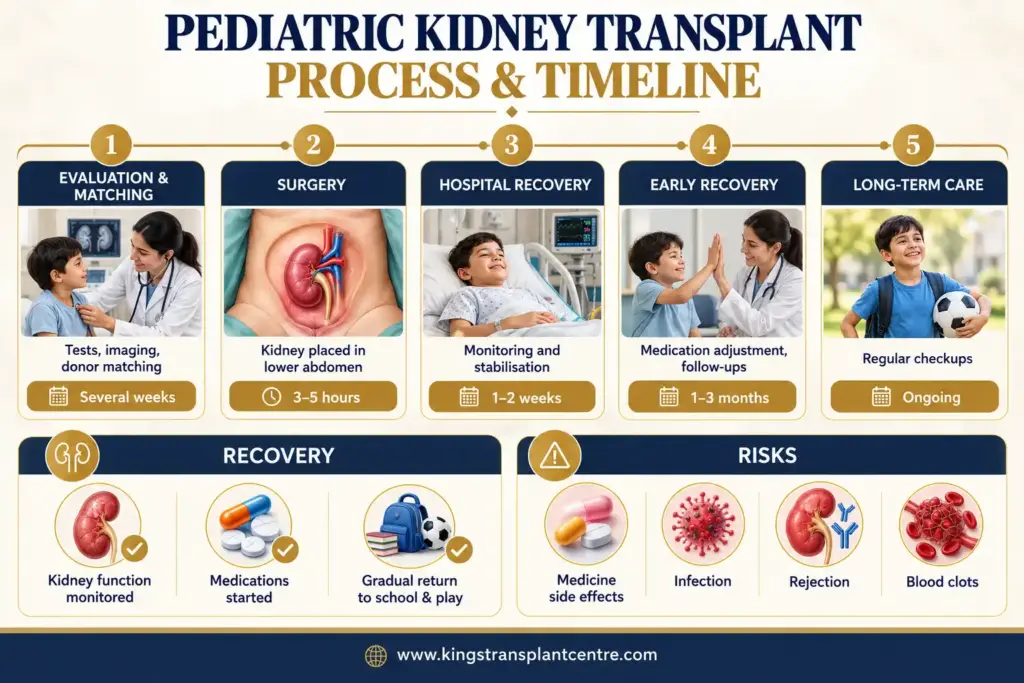
Every child will recover from surgery at different times, but most children will spend 1 to 2 weeks in the hospital following surgery, depending on how they are doing.
During recovery
- The function of the kidney is carefully monitored
- Immunosuppressive medications are started
- Parents are guided on medication schedules and hygiene
- Activity gradually increases over weeks
Typically, children will be able to resume their usual activities and school play once they have recovered, and continued follow-up is necessary.
Risks and considerations
Like any major surgery, a pediatric kidney transplant Dubai carries certain risks, including:
- Side effects of some medicines like immunosuppressive medications
- Complications related to surgery or blood clots
- Infection
- Rejection of the transplanted kidney
These risks can be managed with medications, regular follow-ups, and care. It helps stay updated with the patient’s health and progress, also warning signs.
Pediatric kidney transplant timeline
Stage | What Happens | Approximate Time |
Evaluation | Tests, imaging, donor matching | Several weeks |
Surgery | Kidney transplant procedure | 3–5 hours |
Hospital Recovery | Monitoring and stabilization | 1–2 weeks |
Early Recovery | Medication adjustment, follow-ups | First 1–3 months |
Long-Term Care | Regular checkups and monitoring | Ongoing |
Every child heals differently, so the timeline may change based on their specific condition and recovery process.
Why choose King’s Transplant Centre?
Families seeking a Pediatric Kidney Transplant Dubai often look for a center that combines medical expertise and accuracy with compassionate care. At King’s Transplant Centre, we focus on expert care with top-notch clinical guidance.
Key strengths include:
- Experienced transplant surgeons and Pediatric Kidney Specialists in Dubai
- Multidisciplinary care involving nephrologists, surgeons, dietitians, and pediatric nurses
- Comprehensive pre-transplant evaluation and counseling
- Advanced surgical and monitoring facilities
- Specially formulated long-term follow up programmes for children
- Family-centered approach with education and emotional support
Every step of care is designed to ensure safety, comfort, and continuity for both the child and the family.
Expert pediatric kidney transplant care in Dubai
A pediatric kidney transplant Dubai can be a life-changing treatment for children with kidney failure; it may improve the quality of life of children by offering improved health and growth. With careful evaluation, skilled surgical care, and long-term monitoring, many children go on to lead active and fulfilling lives.
If your child has been diagnosed with advanced kidney disease, consulting experienced Pediatric Kidney Specialists in Dubai at King’s Transplant Centre can help you understand the available options and plan the best course of care.
Pediatric Kidney Trasplant FAQs
How long does a transplanted kidney last in children?
Over the years, it is seen that many transplanted kidneys are working very well. Donor type, adherence to therapy and regular follow-up are all factors that influence longevity.
Can I have an everyday life after a kidney transplant?
Most children return to school, sports, and daily activities after recovery, although regular medical checkups remain necessary.
Is dialysis required after a transplant?
Dialysis is usually not needed once the transplanted kidney begins functioning properly.
Are medications required for life after a transplant?
Yes, children need immunosuppressive medications long-term to prevent rejection of the transplanted kidney.
Can parents donate a kidney to their child?
In many cases, a living donor, often a parent or relative, can donate if medically suitable and compatible.
What are the signs of kidney rejection to watch for?
Other symptoms may include fever, decreased urine output, swelling or pain around the transplant area. If any symptoms are of concern, they should be reported immediately.
How soon can a child return to school after surgery?
Most kids catch up to school in several weeks to months, depending on recovery and doctor’s orders.