

How fast can a kidney infection kill you and What happens if you wait?

If you’re asking how fast can a kidney infection kill you, the honest answer is: it depends on your body, but it can happen faster than most people expect.
A kidney infection can become serious if it is left untreated, especially if the infection spreads into the bloodstream and causes sepsis. In severe cases, sepsis can progress quickly and lead to organ failure.
The good news is that most kidney infections respond well to treatment when diagnosed early. If you have fever, chills, back or side pain, painful urination, nausea, or vomiting, don’t wait for the symptoms to become severe. Seek medical care promptly.
You don’t need to panic, but you do need to act.
Key takeaways: How fast can a Kidney Infection kill you.
|
How fast can a Kidney Infection kill you
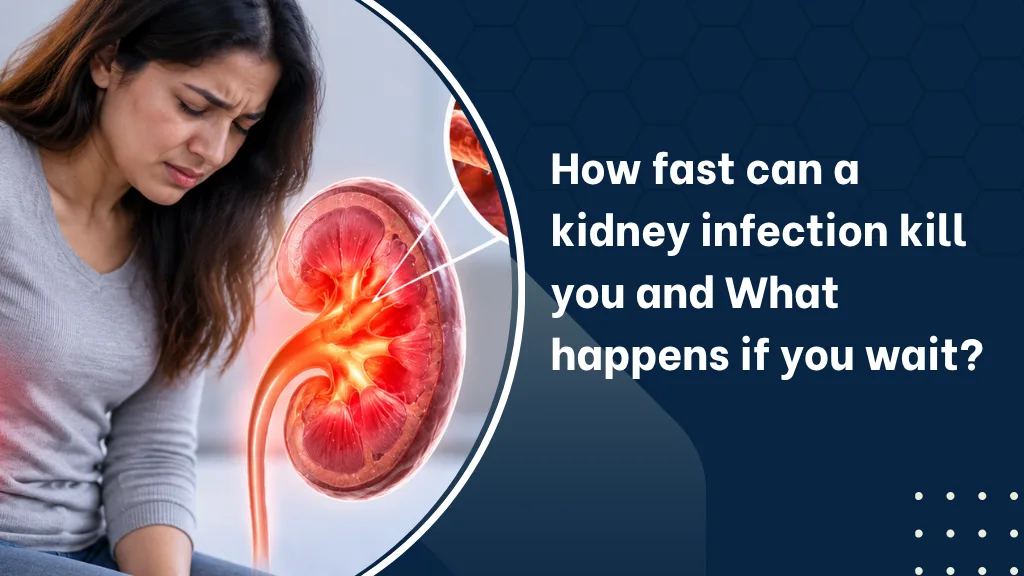
A kidney infection, known medically as pyelonephritis, starts when bacteria travel from your bladder up into one or both kidneys. On its own, it’s treatable.
The problem starts when treatment is delayed. An untreated kidney infection can damage your kidneys or allow the infection to spread into your bloodstream, causing sepsis, a life-threatening condition.
There is no exact timeline for how quickly this can happen. Some infections can become serious quickly, while others take longer to worsen. Your risk may also be higher if you are older, pregnant, have diabetes, or have another condition that affects your immune system.
What you should take from this: you cannot know how quickly your infection will worsen. That’s exactly why doctors treat every kidney infection as something that needs same-day medical attention, not a wait-and-see illness.
Kidney Infection symptoms you shouldn't ignore
Your body usually gives you warning signs before things get serious. Common kidney infection symptoms include:
- Fever, often with chills or shaking
- Pain in your lower back or side (flank pain)
- Nausea or vomiting
- Burning or pain when you urinate
- Needing to urinate more often than usual
- Cloudy, dark, bloody, or foul-smelling urine
- Fatigue or generally feeling unwell
You may have some of these symptoms without having all of them. If you have fever or chills together with urinary symptoms or pain in your side or back, seek medical evaluation promptly.
Sepsis from Kidney Infection: Warning signs
This is the part of a kidney infection that can turn deadly, so it’s worth understanding clearly.
Sepsis occurs when an existing infection triggers a chain reaction throughout your body, and infections that lead to sepsis most often start in the urinary tract. Without fast treatment, sepsis can quickly lead to tissue damage, organ failure, and death.
Watch closely for these severe sepsis warning signs:
- High heart rate or low blood pressure
- Fever, shivering, or feeling unusually cold
- New or worsening confusion or disorientation
- Rapid breathing or difficulty breathing
- Extreme pain or discomfort
- Clammy or sweaty skin
- Very little or no urine
- Severe weakness, dizziness, or difficulty staying awake
Sepsis is the body’s extreme response to an infection, and it’s a life-threatening medical emergency. If you have a kidney infection plus even one of the signs above, don’t wait for it to get worse. Get to a hospital.
Is a Kidney Infection a medical emergency? When to go to the ER?
Not every kidney infection needs an ambulance, but many need same-day care. Here’s how to decide.
Call your doctor the same day if you have:
- New fever with back or side pain
- Burning urination that’s getting worse, not better
- Symptoms that aren’t improving after starting antibiotics for a UTI
Go to the ER right away if you have:
- Fever combined with confusion, a racing heart, or trouble breathing
- Persistent vomiting so you can’t keep fluids or medication down
- Blood in your urine along with fever
- Kidney infection symptoms combined with bloody urine or nausea and vomiting
You’re never overreacting by going to the ER for this. A kidney infection can be serious and can affect one or both of your kidneys, and emergency staff would rather rule out sepsis early than treat it once it’s already set in.
Kidney Infection treatment: What to expect?
The good news is that with prompt care, most kidney infections are very treatable. Kidney infection treatment usually includes antibiotics and might require hospitalization in more serious cases.
Here’s what treatment generally looks like:
- Oral antibiotics for mild to moderate infections, typically for one to two weeks
- IV antibiotics in a hospital if you’re very sick, dehydrated, pregnant, or unable to keep oral medication down
- Fluids and pain relief to manage fever, nausea, and discomfort while the antibiotics take effect
- Follow-up urine tests to confirm the infection has cleared
- Kidney imaging, like a CT scan or ultrasound, if your doctor suspects a blockage, kidney stone, or repeat infections
You should start feeling noticeably better within 48 to 72 hours of starting antibiotics. If you don’t, call your doctor, that’s often a sign the infection needs a different medication or a closer look at what’s causing it.
Don’t wait out a Kidney Infection
Kidney infection symptoms can have several possible causes, and prompt assessment is important to identify the problem and start appropriate treatment.
At King’s Transplant Centre in Dubai, you can access specialist care for kidney infections, kidney disease, and related urinary and renal conditions.
What you can expect:
- Specialist assessment: Your symptoms, medical history, and risk factors are reviewed to understand the cause and severity of the infection.
- Appropriate testing: Urine and blood tests, along with imaging when needed, can help identify an infection and check kidney function.
- Medical treatment: Bacterial kidney infections are typically treated with antibiotics, with the approach based on your condition and test results.
- Multidisciplinary care: Nephrologists, transplant specialists, and other relevant specialists can work together when kidney function is affected or complications are present.
- Personalized treatment planning: Your care is based on the infection, kidney function, overall health, and any underlying conditions.
If you have fever, chills, back or side pain, painful urination, nausea, or vomiting, don’t wait for your symptoms to worsen. Seek medical attention promptly.
Also Read : – What is Stage 3 Kidney Disease? Symptoms, Causes & What You Need to Know
FAQs
Yes. With the right antibiotics and prompt care, most kidney infections clear up completely and leave no lasting damage. The key is starting treatment early and finishing the full course of antibiotics, even once you start feeling better.
Yes, if it’s left untreated. A kidney infection itself is very treatable, but if bacteria spread into your bloodstream, it can lead to sepsis, which can be fatal without emergency care.
A kidney infection is a UTI that has reached the kidneys. A bladder UTI usually causes burning and frequent urination, while a kidney infection is more likely to cause fever, chills, nausea, vomiting, and back or side pain.
There is no fixed timeline. A kidney infection can progress differently from person to person, and you cannot reliably predict when sepsis will develop. If symptoms are severe or rapidly worsening, seek emergency care rather than waiting.
It can lead to permanent kidney damage, repeated infections, or the infection spreading into your bloodstream, causing sepsis. This is why doctors treat kidney infections urgently rather than waiting to see if they resolve on their own.
Warning signs can include a fast heart rate, confusion, trouble breathing, severe pain, clammy skin, or a high fever that does not improve. If these symptoms occur with a kidney infection, seek emergency medical care right away.
A suspected kidney infection requires prompt medical evaluation. If you have signs of sepsis, severe pain, breathing difficulty, confusion, severe weakness, or very little urine, go to the ER immediately.
Yes, early diagnosis and treatment can reduce the risk of serious complications. If you have symptoms such as fever, chills, back or side pain, painful urination, nausea, or vomiting, seek medical care promptly. Taking antibiotics exactly as prescribed is
Overview
Safeguarding Your Kidney Health with King’s Transplant Centre
A kidney infection, also known as pyelonephritis, can become serious if left untreated and may lead to complications such as sepsis or kidney damage. Recognising warning signs such as fever, chills, back or side pain, painful urination, nausea, or vomiting can support timely medical evaluation.
At King’s Transplant Centre, our multidisciplinary specialists provide comprehensive assessment and treatment for kidney infections and related urinary complications, using appropriate diagnostic tests and personalised care plans.
Your kidney health matters. Schedule your consultation with King’s Transplant Centre for expert assessment, timely diagnosis, and appropriate treatment tailored to your condition.