Hepaticobiliary surgery

Hepaticobiliary surgery in Dubai

preloader-medicalist

Advanced Surgical Care for Liver, Bile Duct, Gallbladder, and Pancreatic Conditions

Hepaticobiliary surgery, also called hepato-pancreato-biliary (HPB) surgery, is the specialist surgical treatment of diseases affecting the liver, bile ducts, gallbladder and pancreas. It covers procedures ranging from removing a diseased gallbladder to resecting a liver tumour, clearing an obstructed bile duct, or performing a Whipple procedure for pancreatic cancer. 

These four organs sit closely together and share a common bile and blood drainage pathway, so disease in one frequently affects the others. That is why they are managed as a single surgical specialty rather than by separate departments. For patients, this means one team that understands the whole system, and a single treatment plan instead of a sequence of separate referrals.

The liver, pancreas, gallbladder, and bile ducts form an intricate system vital for digestion, metabolism, and detoxification. Diseases affecting these organs can be complex and challenging, ranging from benign conditions to aggressive cancers.

When medical therapies fail, advanced surgical care referred to as hepaticobiliary surgery becomes a key avenue to regaining health and improving quality of life.

At King’s Transplant Centre of Excellence, our experienced multidisciplinary team specialises in advanced Hepaticobiliary Surgery in Dubai. We deliver holistic care tailored to each patient’s needs, using the latest techniques and technology to achieve the best possible outcomes.

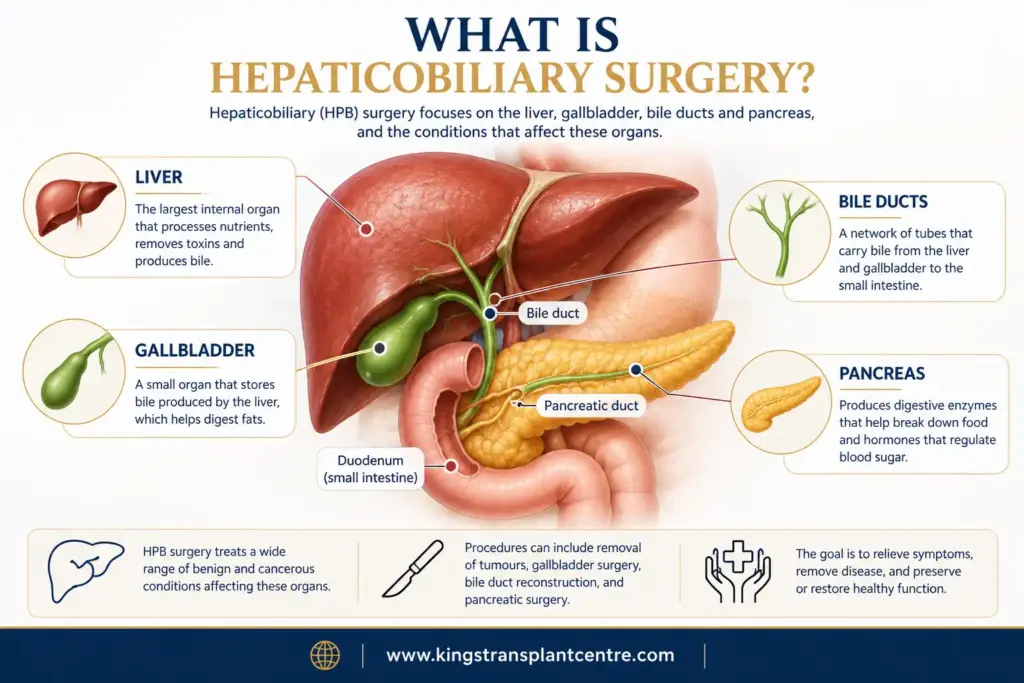
What is Hepaticobiliary Surgery

What is Hepaticobiliary Surgery?

Hepaticobiliary (HPB) surgery involves expert surgical intervention for conditions affecting the:

These are some of the most challenging procedures in general surgery, requiring exceptional skill, accuracy, and thorough knowledge of the involved organs’ anatomy and function.

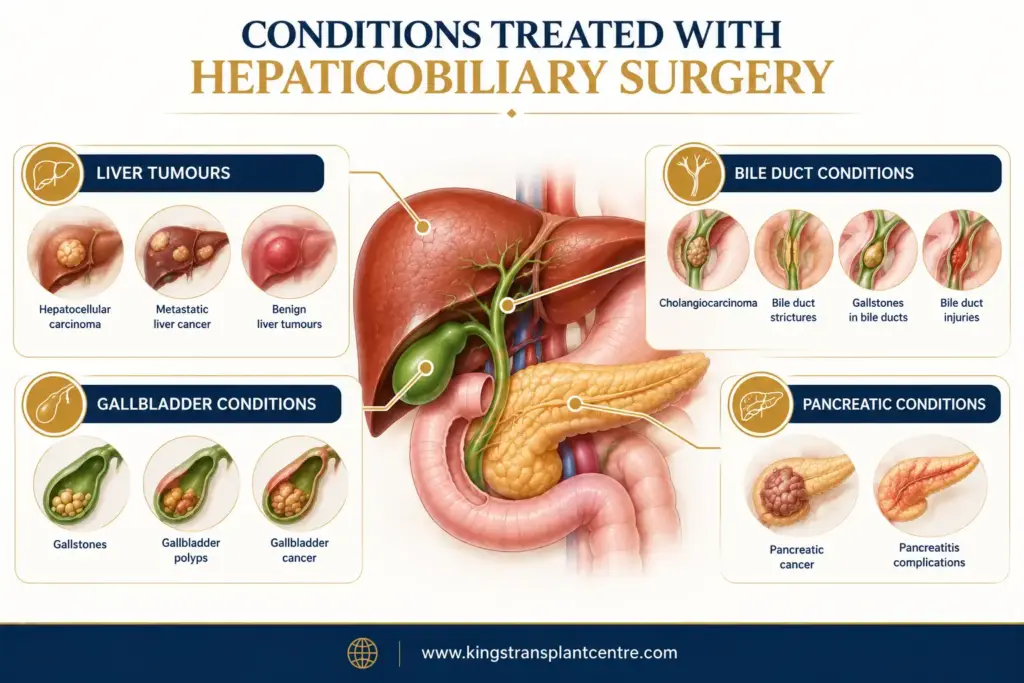
Conditions Treated With Hepaticobiliary Surgery

Our expert team at King’s Transplant Centre of Excellence provides surgical solutions for a wide range of hepaticobiliary conditions, including:

Liver tumours (Benign and malignant):

  • Hepatocellular Carcinoma (HCC): Primary liver cancer, often arising in patients with chronic liver disease or cirrhosis.
  • Metastatic liver cancer: Cancers that have metastasized to the liver from other organs (most often colorectal cancer).
  • Benign liver tumours: Adenomas, focal nodular hyperplasia (FNH), and hemangiomas may require removal if they cause symptoms or have malignant potential.

Bile duct conditions:

  • Cholangiocarcinoma: Cancer of the bile ducts.
  • Bile duct strictures: Constriction of the bile ducts, usually due to inflammation, injury, or tumours, resulting in obstruction of bile flow.
  • Gallstones in bile ducts (Choledocholithiasis): Gallstones that have moved into the bile ducts can cause blockages and lead to infection.
  • Bile duct injuries: Often complications of previous surgeries.

Gallbladder conditions:

  • Gallstones (Cholelithiasis): Causing pain (biliary colic) or inflammation (cholecystitis).
  • Gallbladder polyps: Some of which may have malignant potential.
  • Gallbladder cancer: A rare but aggressive cancer.

Pancreatic conditions:

  • Pancreatic cancer: Including adenocarcinoma, neuroendocrine tumours, and cystic tumours of the pancreas.
  • Pancreatitis complications: Such as pseudocysts or chronic pancreatitis requiring surgical intervention.
Conditions Treated With Hepaticobiliary Surgery

Symptoms and causes of hepaticobiliary conditions

Because the liver, bile ducts, gallbladder and pancreas all feed into the same drainage pathway, very different diseases can present with a similar set of symptoms. Many of these symptoms appear only once bile flow is already restricted, which is why persistent or recurring signs should always be assessed rather than monitored at home.

Common symptoms to look out for
  • Yellowing of the skin and the whites of the eyes (jaundice)
  • Dark urine and pale, clay-coloured stools
  • Persistent itching of the skin (pruritus)
  • Pain in the upper right abdomen, which may be dull and build over several minutes, and can radiate to the back or under the shoulder blade
  • Fever and chills
  • Nausea and vomiting
  • Loss of appetite and unintended weight loss
  • Ongoing fatigue
  • Abdominal swelling, fluid build-up, or a lump that can be felt in the abdomen 

When to seek urgent care: the combination of upper right abdominal pain, fever and jaundice may indicate cholangitis, an infection of the bile ducts. This can progress quickly to sepsis and needs emergency assessment.

Common causes and risk factors
  • Gallstones: Hardened deposits of cholesterol or bilirubin are the single most common cause of bile duct obstruction. Roughly 5 in every 1,000 people develop gallstones that go on to cause an obstruction, and between 10 and 15 per cent of people diagnosed with gallstones are found to have stones in the common bile duct at the same time.
  • Tumours: Cholangiocarcinoma, cancer of the head of the pancreas, ampullary tumours, gallbladder cancer, primary liver cancer and cancer that has spread to the liver can all compress or invade the bile ducts.
  • Bile duct strictures: Narrowing caused by scarring after a previous operation, particularly gallbladder removal, by the passage of a stone, or by inflammation and injury.
  • Choledochal cysts: A congenital abnormality in which sections of the bile duct are dilated, slowing the flow of bile.
  • Mirizzi syndrome: A gallstone lodged in the cystic duct presses on and obstructs the adjacent bile duct.
  • Chronic inflammatory and autoimmune disease: Primary sclerosing cholangitis, primary biliary cholangitis and autoimmune pancreatitis.
  • Acute and chronic pancreatitis: including swelling of the pancreatic head and pseudocysts that obstruct the distal bile duct.
  • Infection: Bacterial and parasitic infection of the biliary tree.
  • Abdominal trauma: or surgical injury to the bile ducts.
  • Chronic liver disease and cirrhosis: which raise the risk of hepatocellular carcinoma. Women carry a higher risk of gallstones than men, linked to the effect of oestrogen on how the liver handles cholesterol.

Why early treatment matters

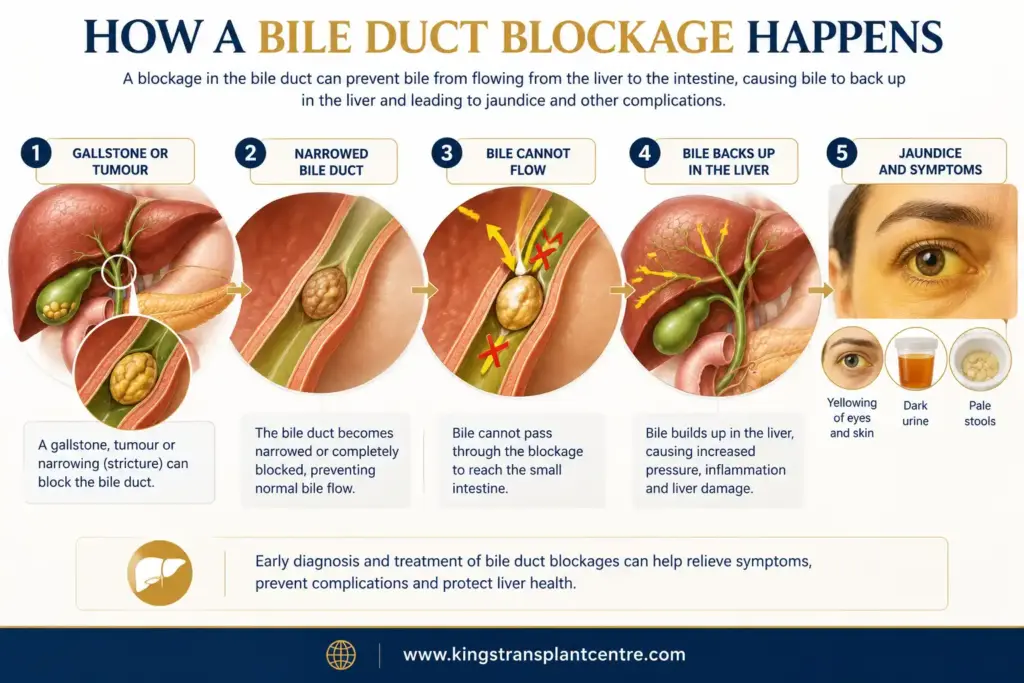
When bile cannot drain, it backs up into the liver. Left untreated, this can lead to infection of the bile ducts and sepsis, inflammation or rupture of the gallbladder, permanent liver scarring and liver failure, and malnutrition because the small intestine cannot break down fats without bile.

How Bile duct Blockage happens

How hepaticobiliary conditions are diagnosed

Accurate diagnosis in HPB disease is about more than confirming a blockage. The clinical priority is identifying exactly where the obstruction sits, what is causing it, and whether it is benign or malignant, because all three answers change the surgical plan. Our team at King’s Transplant Centre of Excellence works through a structured sequence of assessment, laboratory testing and imaging.

Clinical assessment

Diagnosis begins with a detailed history and physical examination. Your consultant will ask how quickly symptoms developed, whether there has been weight loss or appetite change, and will review your alcohol, smoking, medication and travel history, along with any family history of liver, bile duct or pancreatic disease. The physical examination checks for jaundice, tenderness in the upper right abdomen, an enlarged liver or spleen, fluid in the abdomen, and any palpable mass.

Blood, urine and stool tests

  • Liver function tests, where raised bilirubin, alkaline phosphatase and gamma-glutamyltransferase point towards obstruction
  • Full blood count, which can show a raised white cell count in the presence of infection
  • Pancreatic enzymes, amylase and lipase
  • Clotting studies and a comprehensive metabolic profile
  • Viral hepatitis serology and autoimmune antibody testing where the picture is unclear
  • Tumour markers including CA 19-9, CEA and AFP when malignancy is suspected
  • Urine testing for bilirubin, and stool testing for occult blood

Imaging and endoscopic investigation

  • Abdominal ultrasound. Usually, the first test. It is quick and non-invasive, and is effective at identifying gallstones and dilated bile ducts.
  • CT scan of the abdomen. Assesses the liver and pancreatic head, defines the extent of a tumour, and rules out other abdominal causes.
  • MRCP (magnetic resonance cholangiopancreatography). A detailed, non-invasive map of the bile and pancreatic ducts, highly sensitive for stones, strictures and cholangiocarcinoma.
  • Endoscopic ultrasound (EUS). Provides close-range imaging of the pancreas and distal bile duct, and allows needle sampling of suspicious tissue.
  • ERCP (endoscopic retrograde cholangiopancreatography). Both diagnostic and therapeutic. Stones can be removed, tissue sampled and stents placed during the same procedure.
  • HIDA scan. A nuclear medicine study used to assess gallbladder function and cystic duct obstruction.
  • PTC (percutaneous transhepatic cholangiography). Used when the ducts cannot be reached endoscopically, to image the biliary tree and drain it if required.

Tissue diagnosis and staging

Where a stricture or mass is found, a tissue diagnosis is often essential before surgery is planned. Samples can be taken by brush cytology or biopsy during ERCP, by needle aspiration during endoscopic ultrasound, or percutaneously under radiological guidance. Results are then reviewed by our multidisciplinary team, which brings together HPB surgeons, hepatologists, oncologists, radiologists and interventional radiologists, before a treatment pathway is agreed with you.

Advanced Hepaticobiliary Surgical Procedures

Our HPB unit is led by Dr Rakesh Rai, Consultant Hepato-Pancreato-Biliary Surgeon (MS, FRCS, MD, CCT-UK). Dr Rai completed six years of specialist registrar training in the United Kingdom, working in the HPB units at the Royal Free Hospital in London, Freeman Hospital in Newcastle and Queen Elizabeth Hospital in Birmingham. He holds FRCS (Intercollegiate) from the Royal College of Surgeons of Edinburgh, was awarded CCT, and is registered on the GMC specialist register.

Our surgeons are highly skilled in a comprehensive array of HPB surgical techniques, including:

  • Liver resection (Hepatectomy): Removal of a portion of the liver affected by tumours or disease while preserving sufficient healthy liver tissue. This can range from minor resections to complex hemihepatectomies or extended hepatectomies.
  • Radiofrequency ablation (RFA) / Microwave ablation (MWA): Minimally invasive techniques to destroy liver tumours using heat generated by radiofrequency waves or microwaves delivered through a needle. Dr Rakesh Rai’s MD from the University of Newcastle was awarded for research into radiofrequency ablation of liver tumours, and he has since authored a book on the technique.
  • Bile duct resection and reconstruction: Removal of diseased or cancerous sections of the bile ducts and reconstruction to restore bile flow. This includes the management of biliary injury following gallbladder removal, an area of particular specialist interest for our unit.
  • Cholecystectomy: Surgical removal of the gallbladder, most commonly performed laparoscopically (minimally invasive).
  • Pancreatectomy: An operation to surgically remove either a segment or the whole pancreas. This includes:
    • Whipple procedure (Pancreaticoduodenectomy): A highly specialised procedure that involves excising part of the pancreas, duodenum, gallbladder, and bile duct to treat pancreatic head tumours.
    • Distal pancreatectomy: Removal of the pancreas’s body and/or tail.
  • Minimally invasive HPB surgery: Whenever appropriate, we utilise laparoscopic or robotic-assisted techniques to perform complex hepatobiliary procedures through small incisions, which reduces pain, speeds recovery, and reduces scarring.
  • Surgery for portal hypertension:including shunt procedures and gastro-oesophageal devascularisation.

The Recovery Journey for Hepaticobiliary Surgery in Dubai

The recovery period after Hepaticobiliary Surgery in Dubai depends on the type of procedure, case complexity, and the patient’s general health. Our team provides detailed pre-operative instructions and a comprehensive post-operative care plan. This typically includes:

  • Pain management: Ensuring your comfort throughout recovery.

  • Early mobilisation: Gentle movement to speed healing and prevent complications.

  • Nutritional support: Diet guidance to promote healing.

  • Physical therapy: Customised rehabilitation to restore strength and function.

  • Regular follow-up: Monitoring progress and adjusting care as needed.

Recovery can take weeks to months, depending on the procedure, and our team is here to support you every step of the way.

Why Choose King's for Hepaticobiliary Surgery in Dubai?

King’s Transplant Centre of Excellence in Dubai is known for delivering exceptional outcomes in hepaticobiliary surgery. 

Our internationally trained HPB surgeons work closely with a multidisciplinary team including hepatologists, oncologists, radiologists, and specialised nurses to create personalised treatment plans.

That international training is central to how the unit operates. 

Dr Rakesh Rai, who heads our HPB service, trained across three continents: after his general surgical residency at King Edward Memorial Hospital in Mumbai and higher surgical training in the UK, he spent almost two and a half years in transplant surgery fellowship at the Methodist Transplant Institute, University of Tennessee at Memphis, one of the top ten liver transplant centres in the United States. 

He then completed an international fellowship in living donor liver transplantation at Asan Medical Centre in Seoul, the highest-volume liver transplant centre in the world. 

He has published in international journals, lectured in numerous countries, and trained general surgeons in HPB surgery as a postgraduate teacher, including surgeons selected by the Government of Uganda. 

He is a member of the International Hepato-Pancreato-Biliary Association (IHPBA), the International Liver Transplant Society (ILTS) and the International Living Donor Liver Transplant group (ILDLT).

Utilizing advanced technologies such as robotic-assisted surgery, we ensure precision and safety throughout the entire continuum of care, including diagnosis, pre-operative preparation, surgery, and recovery.

Our approach emphasizes not only effective disease treatment but also the preservation of organ function and the enhancement of long-term quality of life.

Hepaticobiliary Surgery FAQ'S

Hepaticobiliary surgery addresses conditions involving the liver, pancreas, gallbladder, and bile ducts. These include benign and malignant tumors, gallstones, bile duct obstructions, complications of pancreatitis, and liver diseases that necessitate surgical management.

Although complex hepaticobiliary procedures may occasionally require open surgery, the center prioritizes minimally invasive approaches when suitable. Laparoscopic and robotic-assisted techniques are frequently employed, resulting in smaller incisions, reduced postoperative pain, and typically faster recovery.

Recovery time following hepaticobiliary surgery varies considerably. Less invasive procedures, such as laparoscopic cholecystectomy, typically require a recovery period of several days to one week. In contrast, complex surgeries, including liver resection or the Whipple procedure, may necessitate hospital stays of five to seven days or longer, with complete recovery extending over several weeks to months, depending on individual patient factors and surgical complexity.

As with any major surgical procedure, hepaticobiliary surgery carries inherent risks. These may include bleeding, infection, bile or pancreatic leaks, blood clots, and complications related to anesthesia. The surgical team at the Center for Hepaticobiliary Surgery in Dubai will provide a comprehensive discussion of all potential risks during the consultation process.

Hepaticobiliary surgery

Reach out to us

for more information

Feel free to contact me, and I will be more than happy to answer all of your questions.