
Cholangiocarcinoma Symptoms: Early Signs and Treatment Options

The bile ducts play a vital role in the digestive system by carrying bile from the liver to the small intestine.
When cancer develops within these ducts, it is known as cholangiocarcinoma, or bile duct cancer. Although relatively uncommon, cholangiocarcinoma can be aggressive, making early recognition and timely treatment essential.
Understanding cholangiocarcinoma symptoms can help patients seek medical attention sooner, potentially improving treatment outcomes.
While some symptoms may appear gradually and resemble other digestive conditions, persistent changes should never be ignored.
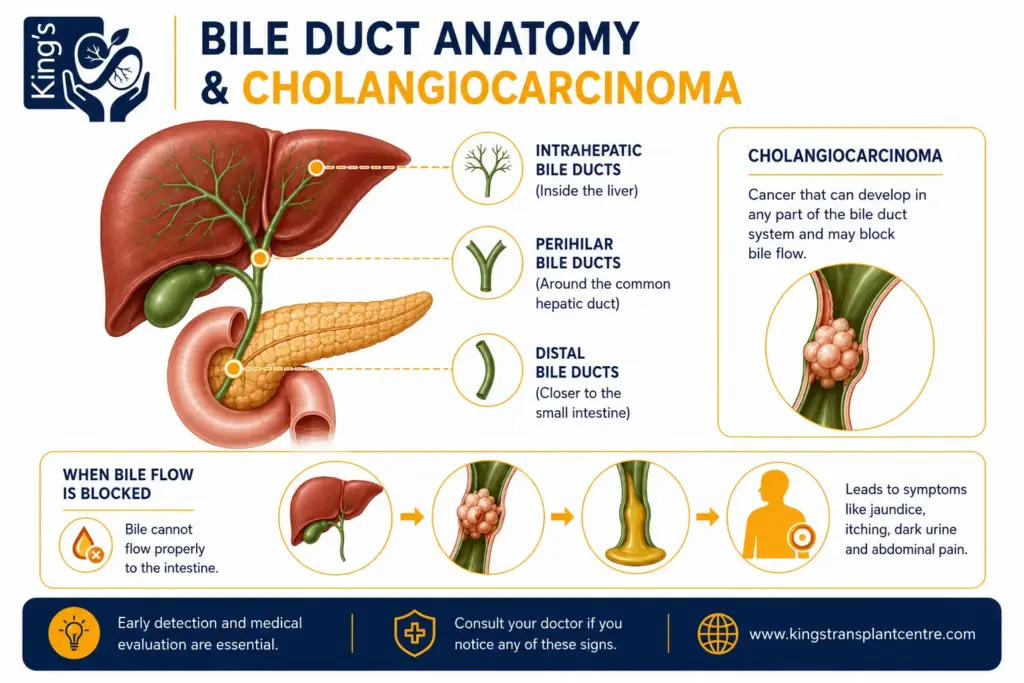
Understanding bile duct anatomy and cholangiocarcinoma
To understand how bile duct cancer develops, it helps to first understand bile duct anatomy.
The bile duct system consists of a network of tubes that transport bile, a digestive fluid produced by the liver. These ducts begin within the liver and join together to form larger ducts outside the liver.
One important structure is the common hepatic duct, which carries bile from the liver before joining with other ducts on its way to the intestine.
Cholangiocarcinoma can develop in different parts of the bile duct system, including:
- Intrahepatic bile ducts (inside the liver)
- Perihilar bile ducts (around the common hepatic duct)
- Distal bile ducts (closer to the small intestine)
Because tumors can block the normal flow of bile, many patients experience symptoms related to bile duct obstruction.
What are the early cholangiocarcinoma symptoms?
One of the challenges of diagnosing bile duct cancer is that early cholangiocarcinoma symptoms may be subtle or absent altogether.
Symptoms include:
- Yellowing of the skin and eyes (jaundice)
- Dark-colored urine
- Pale or clay-colored stools
- Persistent itching
- Unexplained weight loss
- Fatigue and weakness
- Loss of appetite
- Nausea or digestive discomfort
Many of these symptoms occur because the tumor interferes with normal bile flow. Since these symptoms can overlap with other liver or digestive disorders, evaluation by a specialist is important for an accurate diagnosis.
Also Read : – Signs Your Liver is Dying
Blocked bile duct symptoms that should not be ignored
One of the most common causes of symptoms of bile duct cancer is obstruction of the bile ducts.
Typical blocked bile duct symptoms include:
- Progressive jaundice
- Severe itching that worsens over time
- Abdominal discomfort (upper right)
- Dark urine
- Light-colored stools
- Fever or infection in some cases
When a tumor develops near the common hepatic duct, it can significantly restrict bile drainage. This blockage may lead to inflammation, liver dysfunction, and increasing discomfort if left untreated.
Because blocked bile duct symptoms can become serious, prompt medical evaluation is recommended whenever jaundice or unexplained itching develops.
Symptoms of bile duct cancer based on tumor location
The symptoms of bile duct cancer may vary depending on where the cancer originates within the biliary system.
Tumors involving the common hepatic duct or nearby ducts often cause jaundice earlier because they obstruct major bile pathways. In contrast, cancers that develop deeper within the liver may initially present with:
- Abdominal pain
- Weight loss
- Fatigue
- Enlarged liver
As the disease progresses, symptoms often become more noticeable and may affect overall liver function.
As the disease progresses, symptoms often become more noticeable and may affect overall liver function. Discovermore about the early signs of liver damage to understand when medical evaluation is important.
How cholangiocarcinoma is diagnosed
When cholangiocarcinoma symptoms are present, physicians perform a combination of tests to confirm the diagnosis and determine the extent of the disease.
Diagnostic evaluation may include:
- Blood tests to assess liver function
- Tumor marker testing
- Ultrasound imaging
- CT scans
- MRI and MRCP imaging
- Endoscopic procedures
- Tissue biopsy when appropriate
Advanced imaging also helps specialists evaluate structures such as the common hepatic duct and surrounding tissues to understand the extent of the tumor.
Early diagnosis remains one of the most important factors influencing treatment success.
Treatment options for cholangiocarcinoma
Treatment depends on several factors, including tumor location, stage, overall health, and whether the cancer can be surgically removed.
Common treatment options include:
Surgery
Surgical removal offers the best chance for long-term disease control when the cancer is detected at an operable stage.
Depending on the tumor location, surgery may involve:
- Removal of affected bile ducts
- Liver resection
- Reconstruction of the bile drainage system
- Liver transplantation in selected cases
Liver transplantation
For carefully selected patients with specific types of cholangiocarcinoma, liver transplantation may offer an effective treatment option. This approach removes both the tumor and the diseased liver, providing a potential path toward long-term survival.
Chemotherapy
Chemotherapy may be used:
- Before surgery
- After surgery
- For advanced disease
- In combination with other therapies
Radiation therapy
Radiation may help control tumor growth and manage symptoms in selected patients.
Targeted and immunotherapy treatments
Advances in cancer research have led to new therapies that target specific genetic changes within tumors. These treatments may be appropriate for certain patients depending on their tumor profile
Cholangiocarcinoma stage 4 symptoms
Stage 4 bile duct cancer means the disease has spread beyond its original location to distant organs or tissues.
Common cholangiocarcinoma stage 4 symptoms may include:
- Significant weight loss
- Severe fatigue
- Persistent abdominal pain
- Loss of appetite
- Progressive jaundice
- Fluid buildup in the abdomen
Stage 4 cholangiocarcinoma symptoms can be different for each person. Some people may notice their symptoms get worse slowly, while others might see their health change more quickly.
Even in advanced stages, treatment can often help relieve symptoms, improve quality of life, and extend survival.
What happens in the final stages of bile duct cancer?
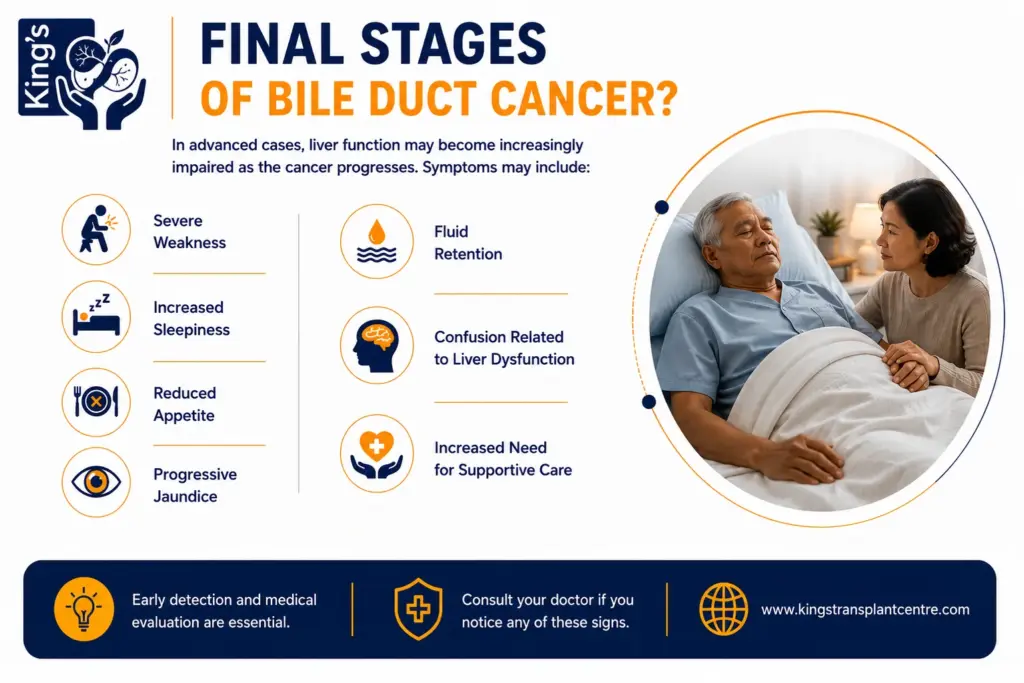
Many patients and families understandably ask, what happens in the final stages of bile duct cancer?
In advanced cases, liver function may become increasingly impaired as the cancer progresses. Symptoms may include:
- Severe weakness
- Increased sleepiness
- Reduced appetite
- Progressive jaundice
- Fluid retention
- Confusion related to liver dysfunction
- Increased need for supportive care
Understanding what happens in the final stages of bile duct cancer allows families to prepare for changing care needs and seek appropriate palliative support.
While discussing advanced disease can be difficult, comprehensive symptom management can make a meaningful difference in comfort and quality of life.
When should you see a specialist?
Persistent jaundice, unexplained weight loss, ongoing digestive symptoms, or any concerning blocked bile duct symptoms should be evaluated promptly.
Early recognition of cholangiocarcinoma symptoms allows specialists to investigate potential causes and initiate treatment when options may be most effective.
Patients with a history of liver disease, bile duct disorders, or unexplained abnormalities involving the common hepatic duct should seek expert evaluation without delay.
King’s Liver Transplant Centre offers advanced care for cholangiocarcinoma and bile duct cancer.
King’s Liver Transplant Centre is the first in the UAE to offer liver transplants for both adults and children. Our team includes internationally trained specialists, uses advanced technology, and provides care from different medical fields.
Our patients benefit from:
- A success rate of over 95% and excellent patient outcomes
- Expertise shared with King’s College Hospital London
- Advanced diagnostic tools and surgical skills
- Comprehensive care that supports you from diagnosis to recovery
- Specialized expertise in liver transplants
- Dedicated teams for both pediatric and adult liver care
- Experienced surgeons, ICU specialists, and a full range of support services
If you are facing complex liver or bile duct conditions, having access to highly specialized care can make a big difference in your treatment and recovery.
Trust the UAE’s pioneering liver transplant center for cholangiocarcinoma care
When cholangiocarcinoma symptoms, symptoms of bile duct cancer, or blocked bile duct symptoms require expert attention, choosing the right team matters.
At King’s Liver Transplant Centre, patients have access to world-class liver specialists, advanced treatment options, and the legacy of one of the world’s leading liver programs.
If you are experiencing persistent symptoms, learn more about our Liver Cancer Treatment services for expert diagnosis and advanced treatment options.
FAQs
Is Cancer of the Bile Duct Curable?
Bile duct cancer can be curable if it is diagnosed at an early stage and the tumour can be completely removed through surgery. Unfortunately, many cases are detected after the cancer has spread, making curative treatment more difficult. Even when a cure is not possible, modern treatments can help control the disease, relieve symptoms, and improve survival and quality of life.
Does Bile Duct Cancer Come on Suddenly?
No, bile duct cancer usually develops gradually over time rather than appearing suddenly. In its early stages, it often causes few or no symptoms. As the tumour grows and blocks the bile ducts, symptoms such as jaundice, itching, abdominal pain, dark urine, pale stools, and unexplained weight loss may become noticeable. Because these symptoms often appear later, early medical evaluation is important if they occur.
Why is this cancer often diagnosed at a late stage?
Cholangiocarcinoma is often diagnosed late because it usually does not cause noticeable symptoms in its early stages. The bile ducts are located deep within the body, allowing the cancer to grow silently before signs such as jaundice, abdominal pain, or weight loss appear. As a result, many cases are detected only after the disease has advanced.
What are the main risk factors?
Several factors may increase the risk of developing cholangiocarcinoma. These include chronic inflammation of the bile ducts, primary sclerosing cholangitis (PSC), bile duct cysts, liver fluke infections, chronic liver disease, hepatitis B or C, cirrhosis, diabetes, obesity, smoking, and increasing age. However, some people develop bile duct cancer without any known risk factors.
How is it diagnosed?
Diagnosis typically begins with a physical examination, medical history, and blood tests, including liver function tests and tumour markers. Imaging tests such as ultrasound, CT scans, MRI, and MRCP help identify abnormalities in the bile ducts. In some cases, endoscopic procedures like ERCP or EUS are performed to obtain tissue samples (biopsy) and confirm the diagnosis.
What are the possible treatments?
Treatment depends on the cancer’s location, stage, and the patient’s overall health. Surgery offers the best chance of cure when the tumour is detected early and can be completely removed. Other treatment options may include chemotherapy, radiation therapy, targeted therapy, immunotherapy, or palliative procedures to relieve blocked bile ducts and improve quality of life. A multidisciplinary team determines the most appropriate treatment plan.
Overview

Safeguarding Your Liver and Bile Duct Health with King's Transplant Centre
Cholangiocarcinoma, also known as bile duct cancer, often develops silently and may not cause noticeable symptoms until it has progressed. Recognising early warning signs such as jaundice, persistent abdominal pain, unexplained weight loss, dark urine, pale stools, or itchy skin can help support timely diagnosis and treatment.
At King’s Transplant Centre, our multidisciplinary specialists use advanced diagnostic imaging, endoscopic procedures, and personalised treatment plans to evaluate and manage bile duct cancer with precision and compassionate care.
Your liver health matters. Schedule your consultation with King’s Transplant Centre for expert assessment, early diagnosis, and access to advanced treatment options tailored to your condition.