
Why Are My Eyes Yellow? What’s Really Behind the Change

Most of us don’t think twice about the color of our eyes until something changes. If you’ve recently looked in the mirror and wondered, “Why are my eyes yellow?”, it’s natural to feel concerned.
While tiredness or poor lighting may sometimes make your eyes appear different, persistent yellowing of the whites of the eyes is often a sign that something more than your vision needs attention.
This guide breaks down why are my eyes yellow in plain, practical terms: the everyday reasons behind it, when it’s likely harmless, and when it’s your liver signaling that something needs attention.
We’ve put this together with insight from the specialists at King’s Transplant Centre, part of King’s College Hospital Dubai and the region’s first dedicated liver transplant centre of excellence. If you’re searching for answers rather than more confusion, you’re in the right place.
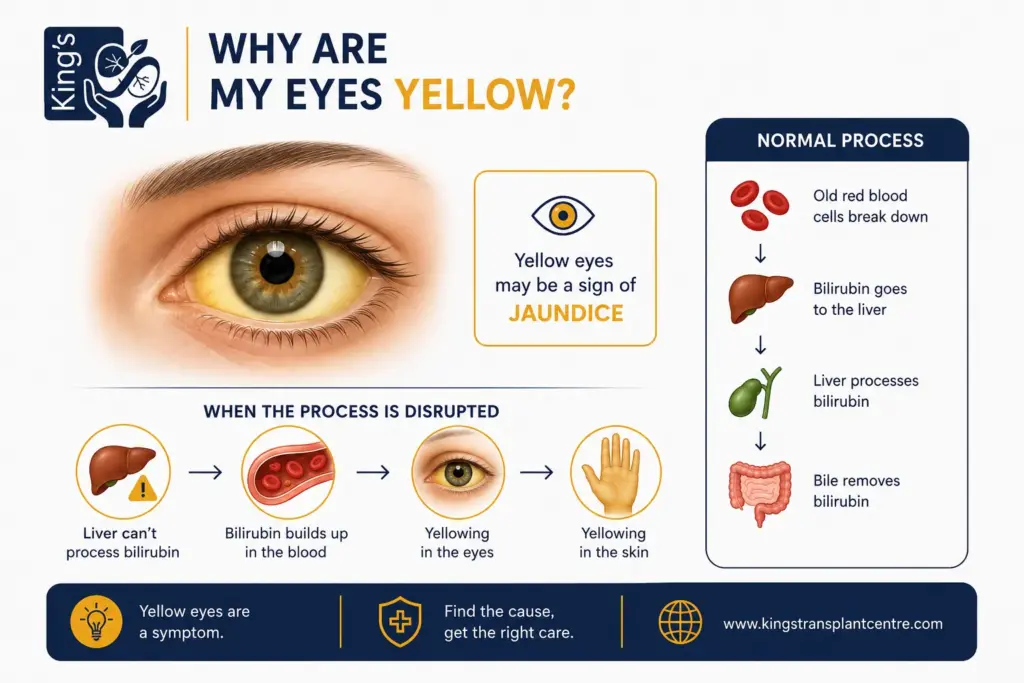
The first thing to know: Yellow eyes are a symptom, not a disease
One of the biggest misconceptions is that yellow eyes are an eye condition. In reality, they are usually a symptom that signals an underlying issue elsewhere in the body, most often involving the liver, gallbladder, or blood.
The medical term for yellowing of the skin and eyes is jaundice. It develops when bilirubin, a yellow pigment produced during the normal breakdown of red blood cells, accumulates faster than the body can process and eliminate it.
Under normal circumstances:
- Old red blood cells are naturally broken down.
- Bilirubin is carried to the liver.
- The liver processes bilirubin and sends it into bile.
- Bile carries bilirubin into the digestive system, where it is eventually removed from the body.
When this process is disrupted, bilirubin builds up in the bloodstream and begins depositing in body tissues, causing the whites of the eyes and, later, the skin to appear yellow.
So, if you’ve been asking yourself, “Why are my eyes yellow?” the answer often lies not in your eyes but in how your body processes bilirubin.
Why do the eyes turn yellow before the skin?
One question many people have is why they notice yellowing in their eyes before they see any change in their skin.
The answer lies in the anatomy of the eye.
The white part of the eye, called the sclera, contains a high concentration of elastic fibers that readily absorb bilirubin. Even a small increase in bilirubin levels can make the sclera appear yellow before any discoloration becomes noticeable elsewhere.
This means the eyes are often among the body’s earliest visible warning signs of liver or bile duct problems.
If you notice persistent yellowing, even if it seems mild, it’s worth arranging a medical evaluation rather than waiting for additional symptoms to develop.
What causes yellow eyes? From mild conditions to serious liver disease
Not all yellow eyes point to the same problem. It helps to think of it as a spectrum, from mild and temporary to a sign of deeper liver disease.So, what causes yellow eyes? The answer depends on whether bilirubin buildup is temporary or linked to an underlying liver, bile duct, or blood disorder.
Slightly yellow eyes in adults: When it’s likely nothing serious
A faint, subtle tint is common and often traces back to:
- Dehydration itself doesn’t usually cause jaundice. However, in people with Gilbert syndrome, dehydration, fasting, or illness may temporarily increase bilirubin levels and make the eyes appear slightly yellow
- Gilbert’s syndrome, a harmless, fairly common genetic trait where the liver processes bilirubin a bit slower than average, often noticeable during stress, fasting, or illness
- A recent viral infection, the liver can take a week or two to fully bounce back
- Certain medications that briefly affect liver enzyme levels
- Short-term heavy alcohol use that temporarily overloads the liver
Slightly yellow eyes in adults tend to come and go and rarely occur with other symptoms.
When yellow eyes meaning points to something more serious
Persistent or deepening yellow eyes are a different story. In these cases, yellow eyes meaning shifts toward conditions such as:
- Gallstones blocking the bile duct
- Hepatitis, whether viral, autoimmune, or alcohol-related
- Cirrhosis, where long-term scarring damages healthy liver tissue
- Tumors of the bile duct or pancreas that physically obstruct bile flow
- Acute or chronic liver failure, where the liver loses much of its capacity to filter bilirubin
The difference between these two categories isn’t always obvious from the mirror, which is exactly why it deserves a proper medical opinion rather than a guess.
Reading the rest of the picture: What your body is telling you
Understanding yellow eyes meaning involves looking beyond the eyes, as they rarely appear without other symptoms that help identify the underlying cause:
- Did it appear suddenly or build up gradually? Sudden jaundice, especially with pain, often points to a blockage like gallstones. Gradual yellowing over weeks or months leans toward chronic liver disease.
- Do you notice that your urine is dark or your stool is very light in colour? This suggests that bile is not draining well and needs to be evaluated promptly.
- Also experiencing fatigue, nausea, abdominal swelling, or bruising? These indicate true stress on liver function, not a temporary fluctuation.
- Are there any signs of confusion, excessive drowsiness or a visibly inflated abdomen? These require emergency care without delay.
Also Read :- Signs Your Liver is Dying
Are slightly yellow eyes in adults always serious?
Mild yellowing of the eyes does not always mean serious liver disease. It can be caused by harmless conditions, such as Gilbert syndrome, in which bilirubin levels temporarily rise during stress, illness, fasting, or dehydration.
However, even subtle yellowing can be an early sign of liver disease. Because the liver can continue working despite significant damage, symptoms may not appear until the condition has progressed. Any new yellow tint in the eyes should be evaluated by a doctor, even if you feel otherwise well.
When yellow eyes could be a medical emergency
While some causes of jaundice develop gradually, others require immediate medical attention. Sudden or yellow eyes with other worrisome symptoms may be a sign of a severe problem involving your liver or bile ducts.
Seek urgent medical care if yellow eyes are accompanied by:
- Severe abdominal pain, particularly in the upper right side
- High fever or chills
- Persistent nausea or vomiting
- Confusion, drowsiness, or difficulty staying awake
- Inflation of the abdomen/legs
- Dark urine and pale or clay-colored stool(s)
- Blood in vomit or black stools.
- Severe progression of yellow discoloration.
In some cases, these symptoms may indicate acute liver injury, a blocked bile duct, or advanced liver disease that requires prompt specialist care.
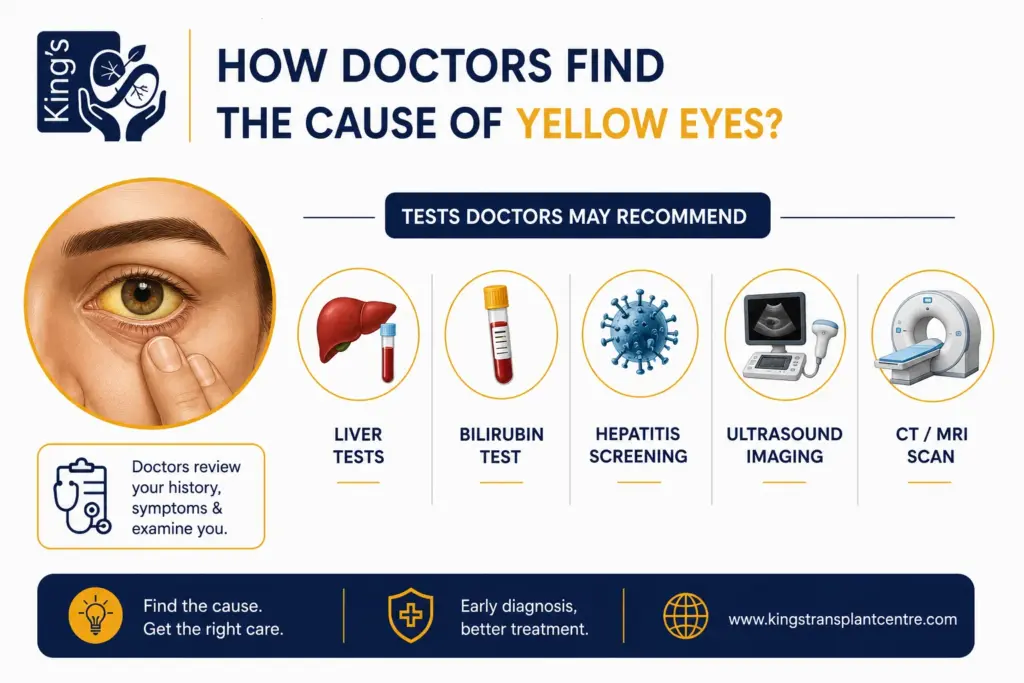
How doctors find the cause of yellow eyes
Because yellow eyes are a symptom, it’s essential to identify the underlying cause before effective treatment solution. Doctor will initially review the medical history and symptoms, followed by a physical examination. Depending on the findings, they may recommend:
- Liver function tests to evaluate your liver function.
- Bilirubin testing to measure the level of bilirubin in your blood.
- Hepatitis screening to check for viral infections that can affect the liver.
- Ultrasound imaging to look for gallstones, bile duct blockages, or liver abnormalities.
- CT or MRI scans, if needed, to provide a more detailed view of the liver and surrounding organs.
Can yellow eyes be treated?
The yellowing itself is not the condition, it’s the underlying cause that needs treatment. Once bilirubin levels return to normal, the yellow discoloration of the eyes usually improves.
Underlying Cause | Possible Treatment |
Viral hepatitis | Antiviral medications and regular monitoring |
Weight management, healthy diet, exercise, and medical treatment where appropriate | |
Gallstones or bile duct obstruction | Endoscopic procedures or surgery |
Medication-related liver injury | Adjusting or stopping the responsible medication under medical supervision |
Blood disorders | Treating the underlying hematologic condition |
Cirrhosis | Long-term specialist liver care and management of complications |
Advanced liver failure | Assessment for liver transplantation when indicated |
Treatment varies from one patient to another, which is why self-diagnosis or delaying medical evaluation can lead to unnecessary complications.
When does yellowing of the eyes point to liver failure? The warning sign you shouldn't ignore
liver failure eyes is a common sign of advanced liver disease, but it rarely occurs alone. It is often accompanied by swelling, easy bruising, fatigue, and confusion as the liver begins to lose its ability to function properly.
In many cases, liver failure develops gradually after years of fatty liver disease, chronic hepatitis, or long-term alcohol use. Yellow eyes are often the first visible sign that the liver needs urgent medical attention.
Quick Fact – The liver is the only internal organ that can regenerate itself. Even after losing a significant portion of its tissue through injury, disease, or living donation, a healthy liver can regrow to a functional size within months. This remarkable ability is one reason early treatment matters and why living donor liver transplantation is possible. |
Can yellow eyes be prevented?
Not every cause of jaundice can be prevented, but many liver conditions are linked to lifestyle factors or can be detected before they become severe.
You can support your liver health by:
- Maintaining a healthy weight
- Eating a nutritious diet with balanced nutrients
- Limiting alcohol consumption
- Completing any hepatitis vaccination schedule as recommended
- Sticking to the prescribed medicine schedule
- Avoiding unnecessary herbal supplements that may affect the liver
- Controlling chronic diseases like diabetes
- Managing chronic conditions such as diabetes
- Scheduling regular health check-ups if you have known liver disease or risk factors
Most importantly, don’t ignore persistent changes in the color of your eyes. Early medical attention often leads to simpler treatment and better outcomes.
Why patients trust King's Transplant Centre for liver health
When yellow eyes point to something beyond a passing dehydration episode, having the right specialists matters. King’s Transplant Centre has a multidisciplinary team trained at King’s College Hospital London, one of the largest liver transplant centres in the world.
Here’s what sets the experience apart:
- A dedicated hepatology and transplant team, liver surgeons, hepatologists, intensive care specialists, radiologists, and transplant coordinators working together on every case
- Full-spectrum liver care, from diagnostic evaluation and liver disease management to living donor liver transplantation
- Advanced diagnostics, including liver function testing and imaging, to pinpoint exactly what’s driving your symptoms
- A patient-first, multilingual team, built to guide both local and international patients through every step
- Deep experience in living donor liver transplantation, offering a path forward even for patients facing advanced liver disease
Don't ignore what your eyes are trying to tell you
Whether your yellow eyes turn out to be a minor, short-lived issue or an early sign of something that needs ongoing management, getting a clear answer starts with the right evaluation.
A simple bilirubin and liver function test can settle the question quickly and point you toward the right next step. If you’re still wondering, “Why are my eyes yellow?”, don’t ignore persistent changes. Early evaluation can help identify the cause before complications develop.
Don’t wait for the yellow to deepen, book a consultation with King’s Transplant Centre today and get answers from the specialists who know liver health best.
FAQs
Sudden yellowing usually indicates a rapid buildup of bilirubin, often due to a gallstone blocking the bile duct, an acute infection, or a sudden liver injury. Because it can escalate quickly, sudden jaundice should be evaluated within days, not weeks.
- The liver is the most common cause, but disorders of red blood cells, such as hemolytic anemia, some genetic disorders such as Gilbert’s syndrome, and, rarely, disorders of the pancreas, which affect bile flow, may also cause yellow eyes.
Not necessarily. It is usually caused by something temporary, dehydration, a mild virus infection, or Gilbert’s syndrome. Any new yellow tint, however, should be discussed with your doctor, particularly if it lasts more than a couple of days.
It’s possible, but less common. Liver failure eyes are usually accompanied by other signs such as fatigue, swelling, or confusion, by the time jaundice is visible. Still, any yellowing warrants testing to rule out early-stage liver dysfunction.
Diagnosis typically involves a blood test to measure bilirubin levels, liver function tests, and sometimes imaging, such as an ultrasound to check for blockages or structural liver changes.
Overview
Safeguarding Your Liver and Bile Duct Health with King's Transplant Centre
Cholangiocarcinoma, also known as bile duct cancer, often develops silently and may not cause noticeable symptoms until it has progressed. Recognising early warning signs such as jaundice, persistent abdominal pain, unexplained weight loss, dark urine, pale stools, or itchy skin can help support timely diagnosis and treatment.
At King’s Transplant Centre, our multidisciplinary specialists use advanced diagnostic imaging, endoscopic procedures, and personalised treatment plans to evaluate and manage bile duct cancer with precision and compassionate care.
Your liver health matters. Schedule your consultation with King’s Transplant Centre for expert assessment, early diagnosis, and access to advanced treatment options tailored to your condition.